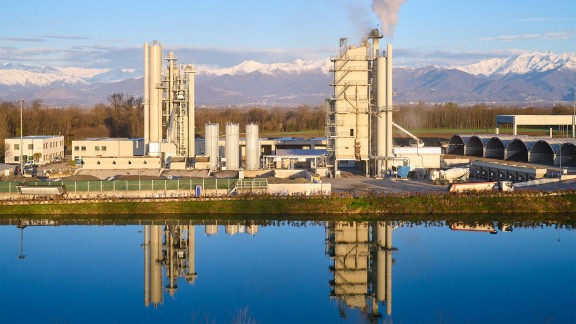
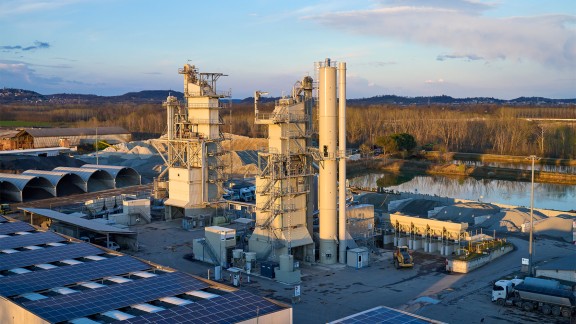
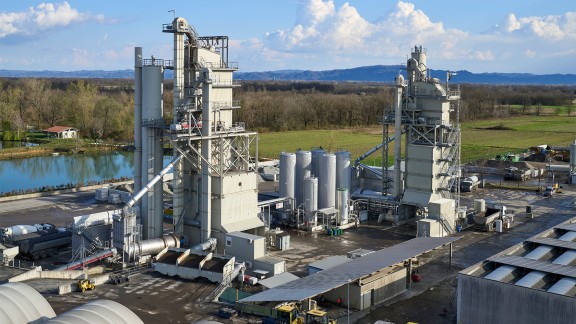
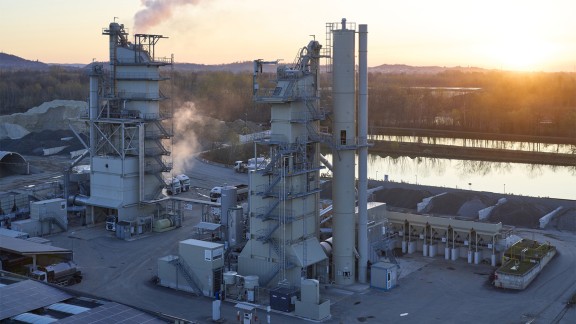
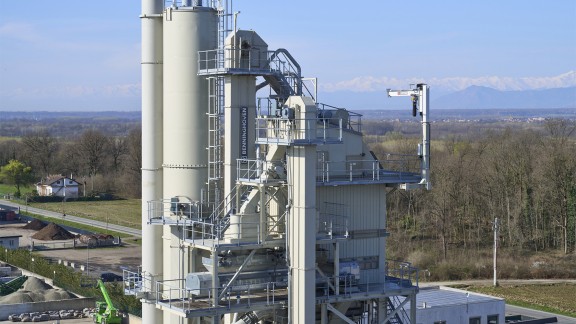
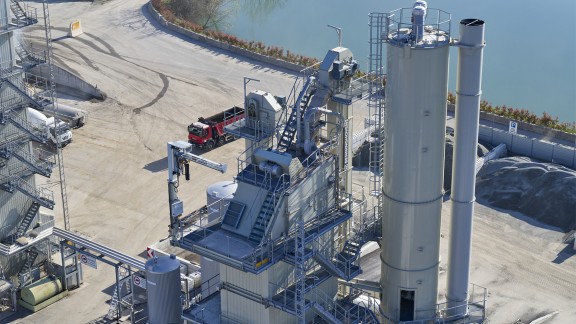
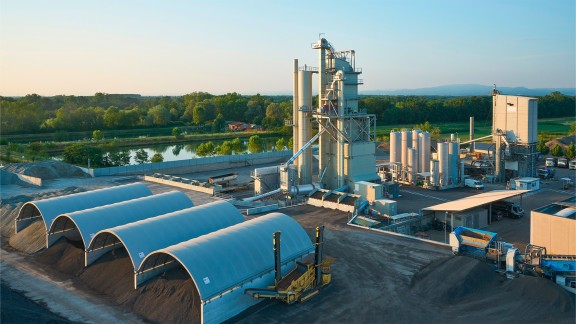
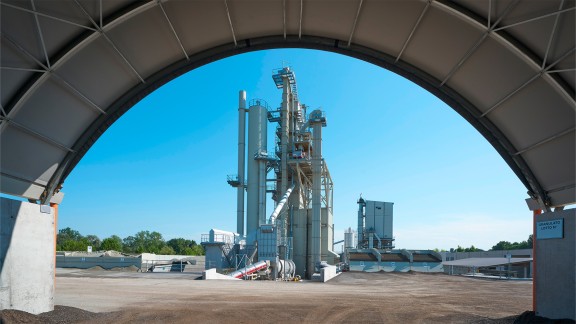
TBA 3000 Plus with REVOC system
November 2026 | Reading time: 6 min
Anticipatory action secures asphalt production in Piedmont
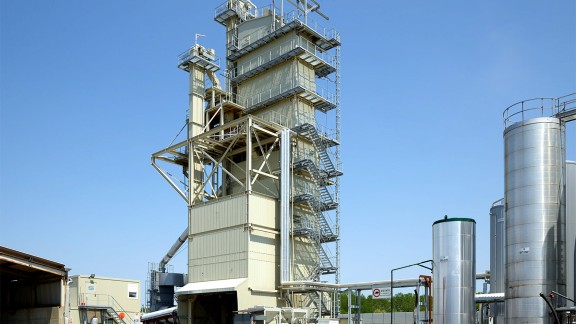
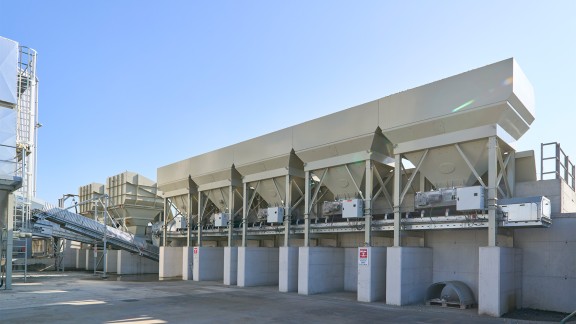
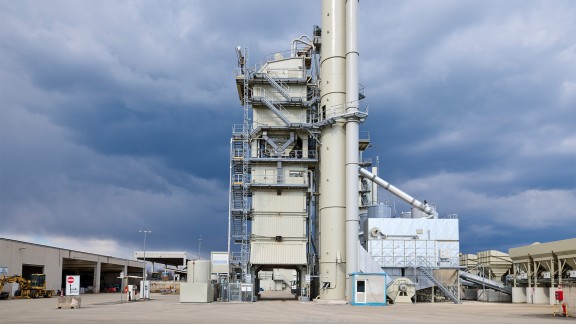
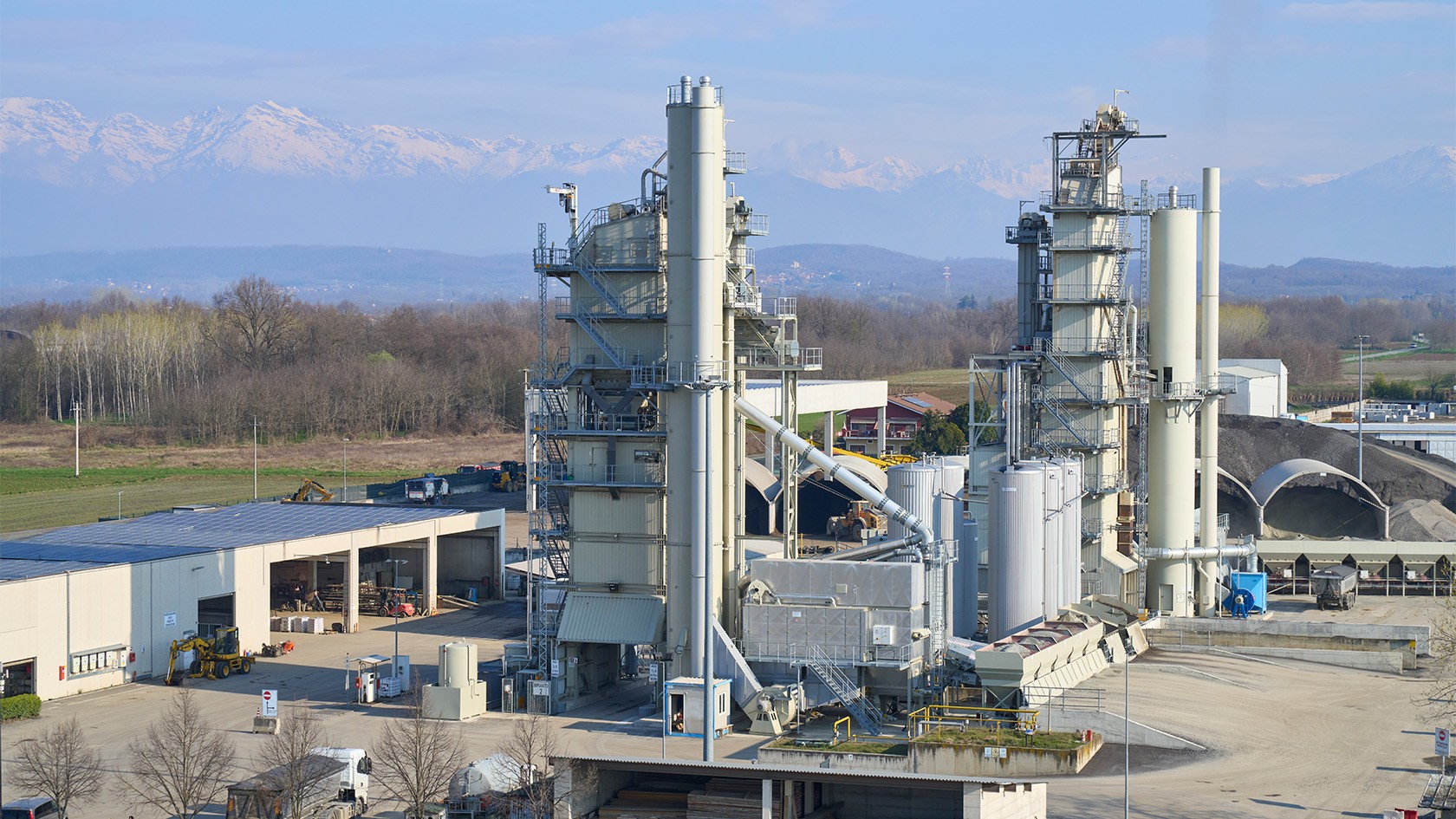
With its new TBA 3000 Plus, Italian construction company Bitux Spa can rest easy when it comes to facing the challenges of the future. Not only does the Benninghoven plant impress with high output capacities up to 240 t/h and a wide range of recipes, the patented REVOC system from Benninghoven also enables the implementation of a high content of reclaimed asphalt pavement (RAP) while complying with the strict emissions limits in Piedmont for volatile organic compounds (VOC) of 30 mg/m³.
Stricter environmental regulations keep posing new challenges for owners of asphalt mixing plants, for example in Piedmont, where Bitux Spa has its headquarters near the city of Turin. The Italian Ministry for Environment and Energy Security imposed the “CAM Strade” here in 2024 – a regulation that requires the environmental impact to be considered during all phases of road infrastructure projects, from planning to maintenance. Among other things, it governs the emissions produced during the use of RAP. As Bitux produce RAP mixtures at the Foglizzo site, the company had to act to ensure that a consistently high RAP input can be reliably implementend and remains economically viable in the future.
The Italian company already invested in a Benninghoven BA 5000 plant in 2018. Since its commissioning, the plant has impressed with its consistently high production output, recipe variety, ease of use and maintenance, and reliable performance.
It consequently does not come as a surprise that Bitux once again selected a technological solution from Benninghoven for its second plant: the TBA 3000 Plus with REVOC system. “The high level of reliability was one reason for us to purchase a second plant from Benninghoven. There has been virtually no downtime since the first plant was put into service,” reports Silvia Valle, Managing Director of Bitux Spa. Another advantage: As the control systems for both plants are identical, there is adaptation period for the users. This standardisation significantly increases efficiency.
In light of increasing raw material prices, Bitux focuses on a high RAP input for asphalt production to achieve savings on account of using less new materials and to maintain a stable market position. While the permissible RAP content in Italy is currently only 30%, Bitux is already perfectly prepared if the rates should increase in the future. The BA 5000 as well as the TBA 3000 Plus can handle a RAP input of up to 40%.
The introduction of the CAM Strade marks a turning point. The ministerial decree specifies an increase in the RAP input from 20% to up to 60%, provided that the emissions limits for VOCs of 30 mg/m³ are reliably met. This target becomes a core challenge for plant owners, requiring Bitux to shift its focus in order to retain its operating licence.
The exact details of the CAM Strade can be found here:
Information from the Italian government
Informationen from CertificoAI
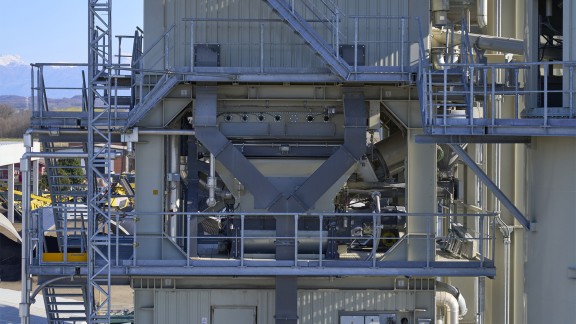
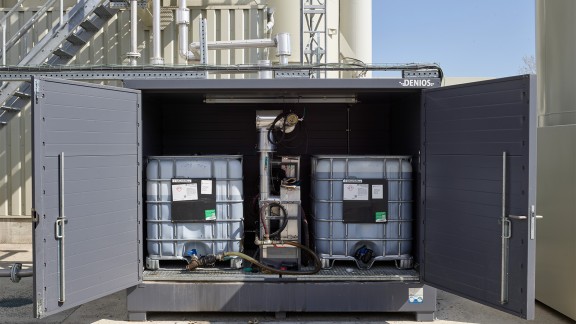
The solution was provided in the form of the patented REVOC system from Benninghoven, which was integrated into the TBA 3000 Plus. This patented technology supplements existing cold and hot feed RAP systems. With optimum technical configuration and adaptation to the plant, a high RAP input can be achieved while complying with strict emissions limits. REVOC makes a key contribution to securing the future of a plant site by giving plant owners certainty regarding the official regulations while enabling them to continue their economically viable production.
Side note
REVOC system reduces VOC emissions
Heating RAP and the old bitumen in it produces VOCs that evaporate. These are directed into the REVOC system for thermal processing and eliminated there. The system is configured to ensure clean, complete combustion.
For Bitux, the 30 mg limit for VOC is defined in the “AUA” (Autorizzazione Unica Ambientale) environmental licence that was issued by the Città Metropolitana di Torino (authority responsible for the regulations on environmental emissions of plants in the Turin province).
The past two years have shown Silvia Valle that the REVOC system meets all expectations in terms of the official limits and, even more importantly, that the efficiency of the plant increased while running costs came down. The Managing Director therefore also wants the retrofit the BA 5000. Even small structural changes are enough to update the existing plant to the state of the art.
Since its commissioning in 2018, the BA 5000 has produced an impressive 1,550,000 tonnes of asphalt. With the new TBA 3000 Plus, production has now been increased by another 20%. Firstly, this second plant ensures a consistent production output at all times. “Being able to rely on two plants has certainly provided us with great stability,” says Silvia Valle. In addition to the consitent production output, however, there is another key aspect. As the BA 5000 and TBA 3000 Plus can be used in parallel, special jobs and standard production can be run at the same time. Bitux is increasingly focusing on niche markets and can now also flexibly and economically cater to special customer requests such as coloured asphalt mixtures. Previously, special mixtures had required a temporary change to the entire production.
Always with an eye on the future, Bitux is focusing on innovative solutions. One core aspect is the production of warm-mix asphalt using the foam bitumen technology from Benninghoven. The new module will undergo intensive testing in the coming months.
Side note: Information about the CAM Strade
The Italian ministerial decree dated 5 August 2024 (Decree by the Ministry of Environment and Energy Security) defines the minimum environmental criteria (Criteri Ambientali Minimi – CAM) for the construction, maintenance and expansion of road infrastructure (CAM Strade). The decree came into force on 21 December 2024 and was later supplemented by the decree on 11 September 2025.
Content and objectives