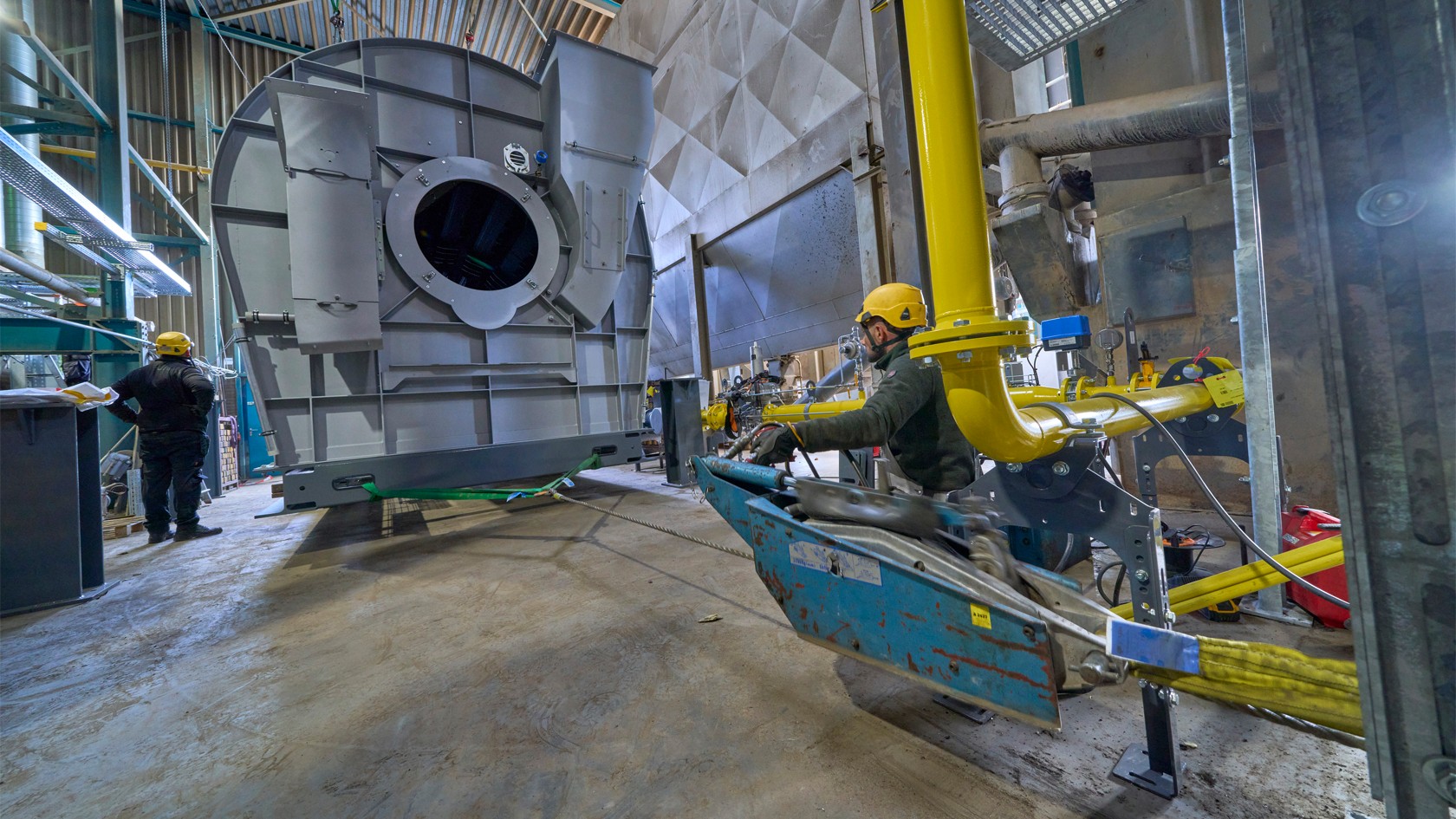
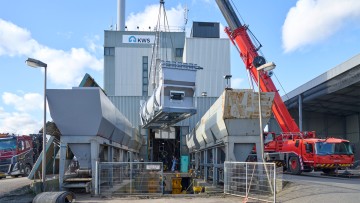
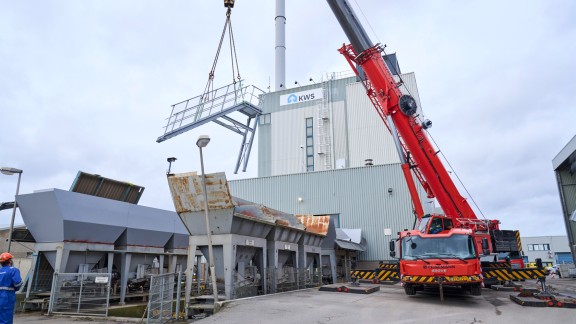
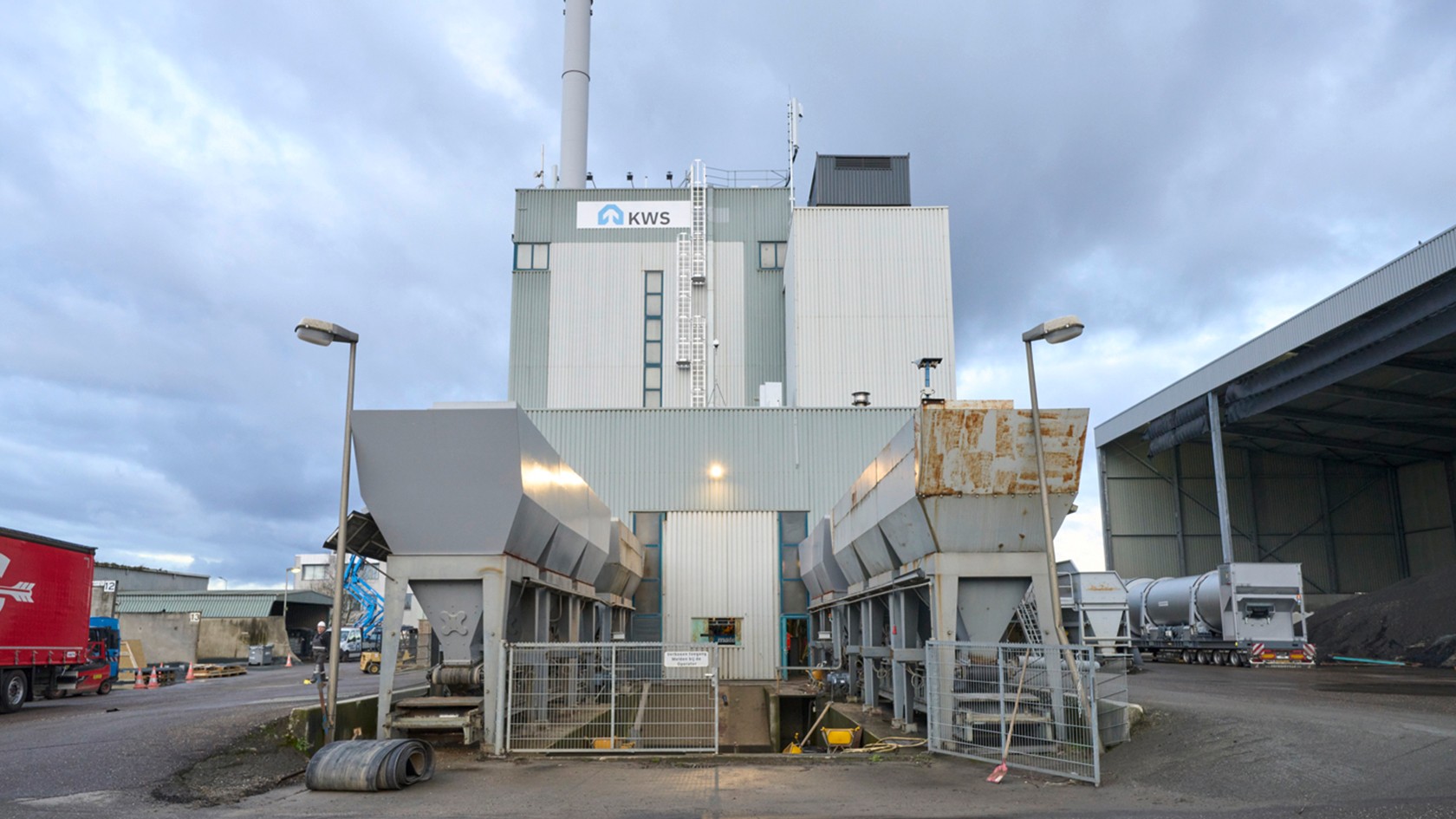
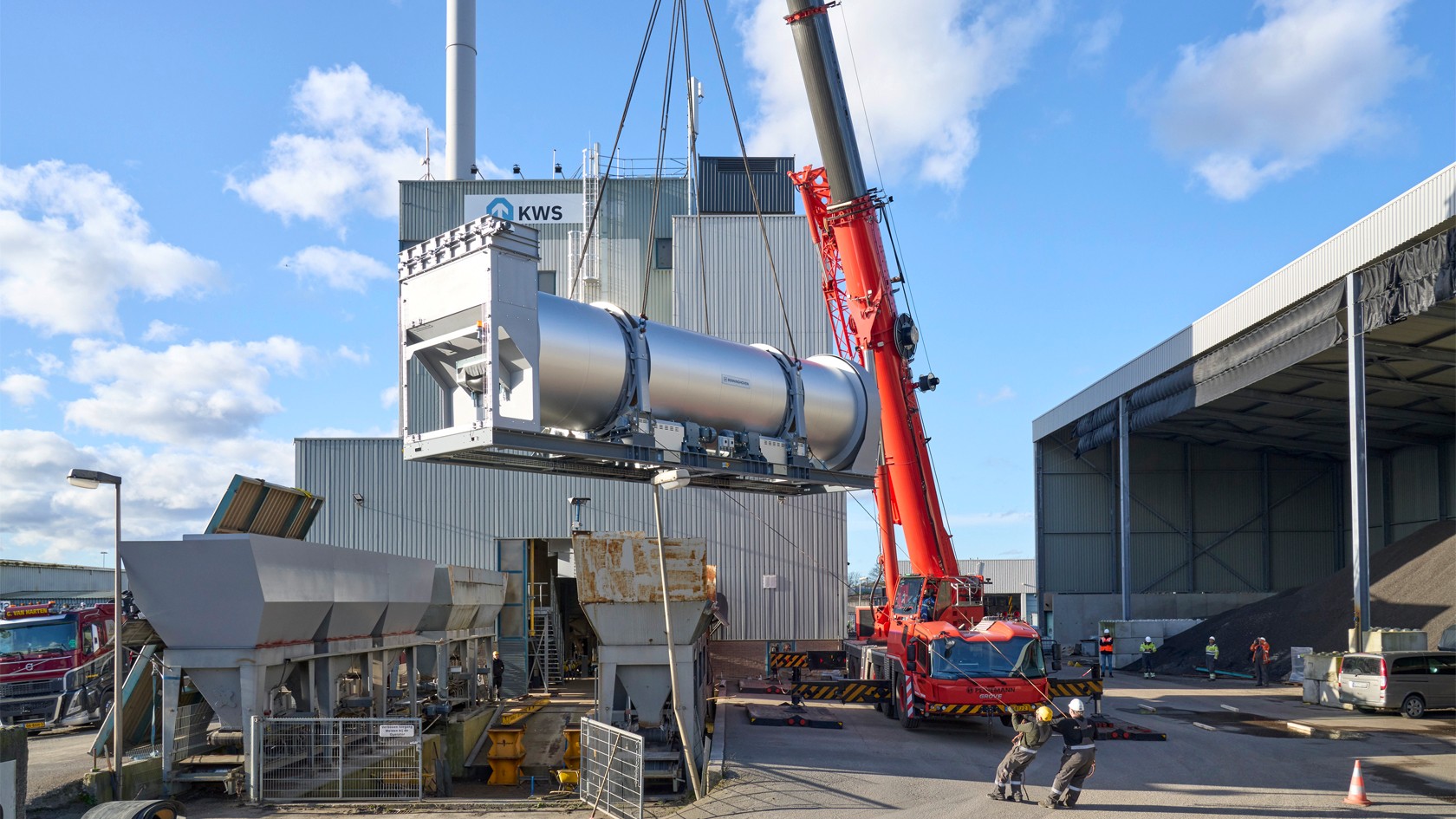
New burner suspended from a crane in front of the KWS asphalt mixing plant.

State-of-the-art upgrade in Eindhoven

Precision planning and a collaborative rollout

Benninghoven and KWS Infra have taken their teamwork up a notch, and completed their first major joint Retrofit in years. With the dryer drum and burner now swapped out for the latest Benninghoven technology, the asphalt mixing plant in Eindhoven is once again leading the way when it comes to high productivity and a competitive edge, while ensuring the site’s long-term viability.

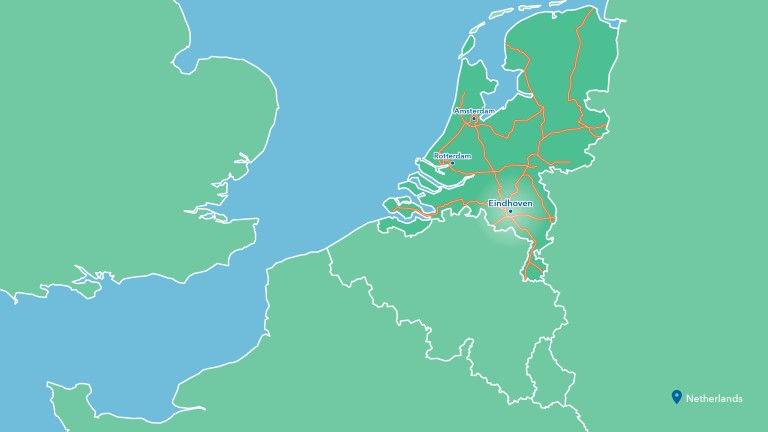
KWS Infra is a subsidiary of VolkerWessels Infrastructure, the Netherlands’ leading infrastructure specialist. Located on the outskirts of Eindhoven, the asphalt mixing plant has been in operation since 1990, supplying both public construction projects and the company’s own installation crews with a wide range of asphalt mixtures. Due to the plant’s age and the advanced wear evident on both the burner and the dryer drum, the company decided to Retrofit both components and immediately contacted Benninghoven – the specialists for burner technology and drying sections.

Tolles Produkt

Focus on productivity and functional reliability

By replacing the dryer drum and burner, KWS Infra pursued two key objectives: increasing the drum’s volume to optimize production and drying performance, and ensuring the burner’s extended service life and functional reliability. The company also hoped that the retrofit project would improve product quality, offer economic benefits, and reduce energy and resource usage.

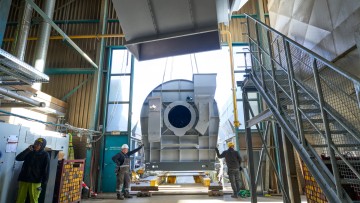
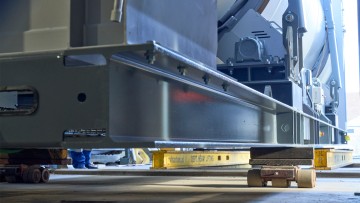
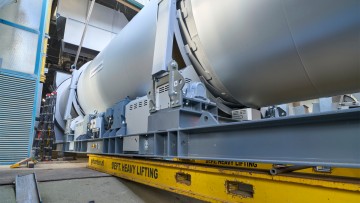
Dryer drum is transported to its new location.

Perfectly coordinated components plus clearly defined interfaces

The Benninghoven dryer drum and burner form a perfectly coordinated system of machinery that maximizes efficiency gains. Benninghoven’s engineers developed a tailor-made overall strategy for the Eindhoven plant that accurately reflected customer requirements and took all of the necessary interfaces into account.

Larger dryer drum to boost thermal process efficiency

With a length of 10 m (previously 9 m) and a diameter of 2.4 m, the new Benninghoven dryer drum offers a significantly greater volume. A modern frequency converter control system enables precise fine adjustment of the setting range during the drying phase. This ensures optimal control of heat transmission from the burner flame to the virgin material. The setpoint in the drying process must be carefully selected, as it directly affects process optimization and fuel consumption. If less fuel is needed – because the continuously variable drive is more energy-efficient – carbon emissions are reduced. This fine adjustment benefits the production of low-temperature/warm mix asphalt. The drying process for the virgin material in the drum can be reduced by up to 30 °C – a significant step towards greater energy efficiency. A newly integrated louvre damper also regulates airflow within the drum.

Dryer drum in front of the asphalt mixing plant on a sunny day.

Onsite delivery of the complete dryer drum, including base frame and feed/discharge endwall.

Onsite delivery of the dryer drum

Onsite delivery of the complete dryer drum.

Man in construction site gear works on the dryer drum.

Preparatory work on the dryer drum.

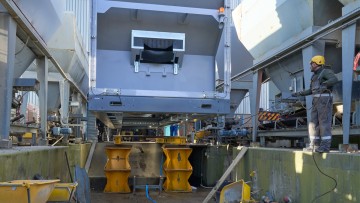
A crane is used to move the dryer drum into place.

Dryer drum positioning prior to installation work.

Using a crane to slide the dryer drum into the mixing plant emissions enclosure.

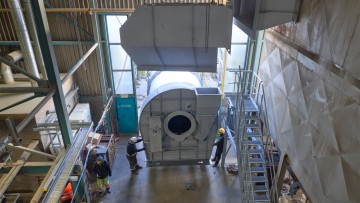
Using a specialized jig to slide the dryer drum into the mixing plant emissions enclosure.

Using a specialized jig to slide the dryer drum into the mixing plant emissions enclosure.

Using a specialized jig to slide the dryer drum into the mixing plant emissions enclosure.

Using a specialized jig to slide the dryer drum into the mixing plant emissions enclosure.

Using a specialized jig to slide the dryer drum into the mixing plant emissions enclosure.

Using a specialized jig to slide the dryer drum into the mixing plant emissions enclosure.

Using a specialized jig to slide the dryer drum into the mixing plant emissions enclosure.

Using a specialized jig to slide the dryer drum into the mixing plant emissions enclosure.

Using a specialized jig to slide the dryer drum into the mixing plant emissions enclosure.

Benninghoven dryer drums

  • Various drum sizes available (virgin material and/or RAP dryer drums), from 8 to 12 m in length
  • Diameter: 2 to 3 m in various increments
  • VFD control system (continuously variable drive)
  • Very easy to maintain, thanks to optimized access
  • Can be used for a wide range of cold feed recipes
  • Economical and efficient virgin material drying

Functionally reliable burner

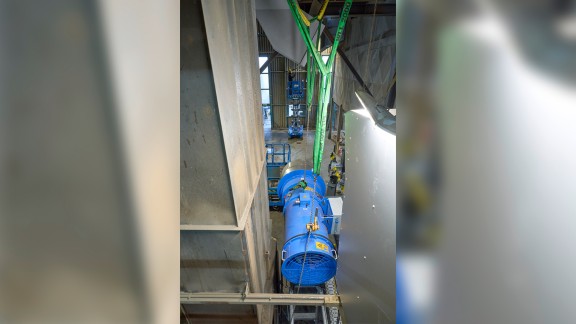
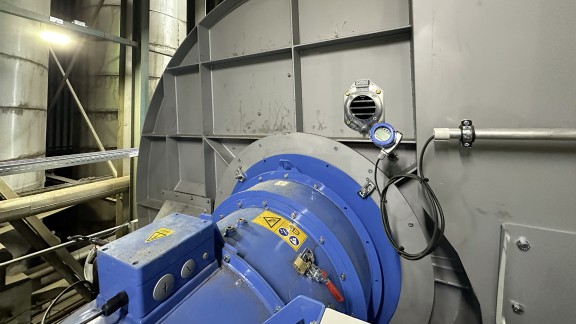
The new burner features a compact design and can be operated with up to four fuels, including hydrogen. This project used natural gas, which is widely available in the Netherlands.

One real benefit for the customer is the new burner control with remote access, enabling user-friendly online diagnostics via remote management. Experts from the main Benninghoven factory can access the burner itself to identify and locate any faults. This allows the factory team to provide direct support, eliminating the need for local service callouts – significantly boosting plant availability and rapid response times.

Burner – also available as a Retrofit

  • Modular setup
  • 4 Fuels possible
  • Compact design
  • Easy maintenance
  • Long service life, low wear
  • Frequency control for fuel-efficient consumption
  • State-of-the-art control technology minimizes emissions
  • Good all-round access
  • Control system with remote management

Additional work packages

A number of additional work packages were also completed at the customer’s request – some by Benninghoven and some by the customer. Precise coordination of the various responsibilities and handover points was crucial to ensure that all the components fitted together – and the KWS-Benninghoven team achieved this with ease.

  • Natural gas safety route up to handover point to existing gas grid
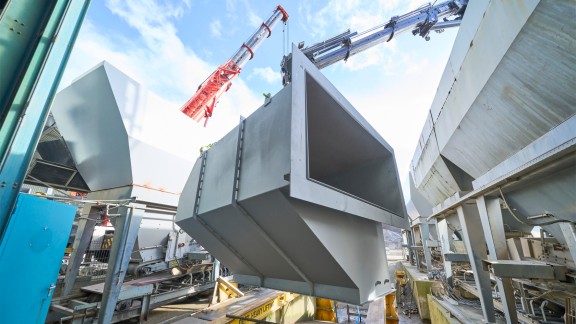
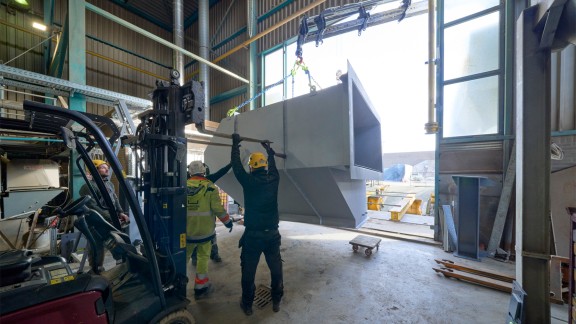
  • New raw gas duct, plus separate feed nozzle for reduced-emission aggregates.
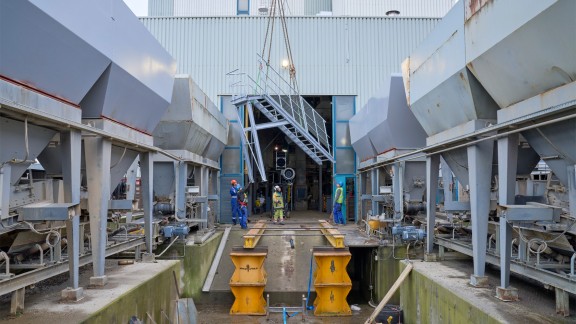
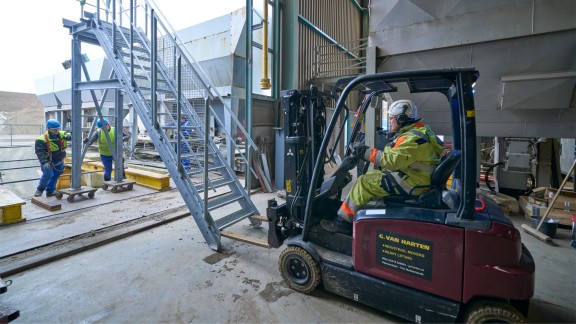
  • Side staircase with platform and railings leading to the maintenance door of the dryer drum, to facilitate maintenance tasks

“Coordination with the customer was smooth and efficient throughout. All in all – this was truly a textbook project!”

Sebastian Heil, Regional Sales Manager Benninghoven

Many interfaces – perfectly coordinated

Ensuring the precise definition of all interfaces was critical to the project’s success. For a Retrofit in particular, the various interfaces present within the components of an asphalt mixing plant need to be properly taken into account. Multiple trades are involved here, from structural work to machine leasing, as well as specialized firms that may be engaged for conveyor belt adjustment work or dismantling the asphalt mixing plant emissions enclosure. However, thanks to the seamless coordination with KWS Infra, Benninghoven and its customer worked together like precision-engineered gears throughout every phase of the project. Both teams knew exactly what needed doing, provided mutual support, and ensured a polished result.

Emissions enclosure – flawless dismantling and assembly

In the Netherlands, plants are typically housed in an emissions enclosure to minimize environmental impact from dust, noise, and other pollutants. In order to install the dryer drum and burner, the enclosure therefore had to be opened up in many places and resealed afterwards. KWS Infra decided to have this work package completed by an external specialist firm. This solution was practical and economical, as dismantling and reassembling the enclosure is most certainly a job for experts. To ensure that all of the interface handovers ran like clockwork, Benninghoven’s site supervisor monitored the process and provided support when required.
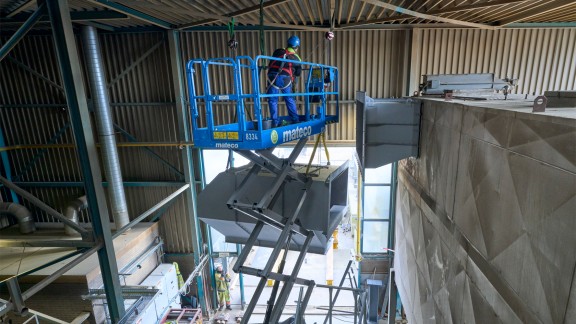
Dismantling of the emissions enclosure by a specialist firm.

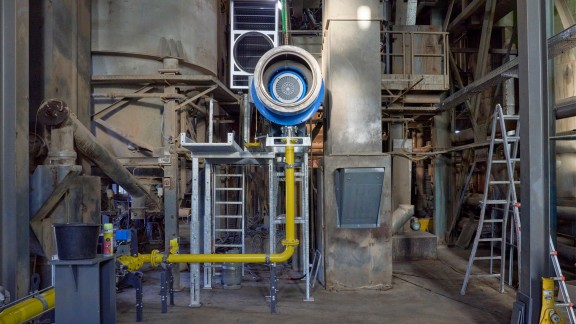
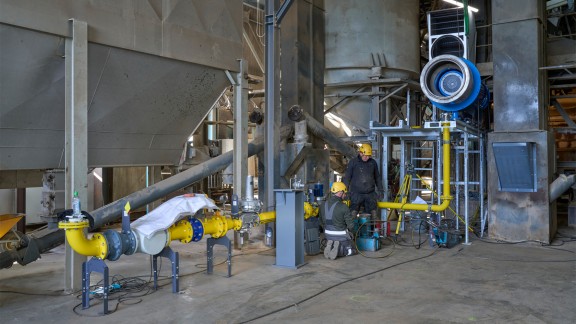
The burner unit is already installed in the mixing plant.

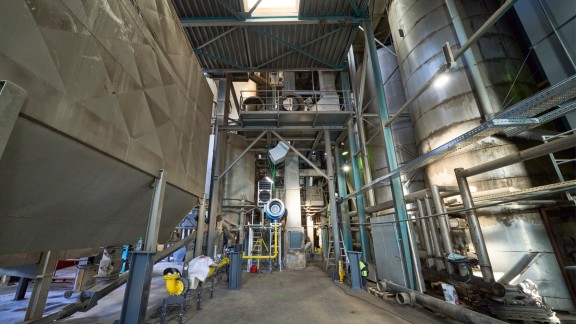
The side staircase and the raw gas duct are prepared for the installation of the new dryer drum.

Direct sales team keeps things simple

No intermediaries or branch offices, only direct communication between Benninghoven’s main factory and the customer. From the initial enquiry through to negotiations, planning and execution, the project was delivered on schedule. At this level of interface complexity, this direct approach has proven to be the simplest and most efficient solution. The project was officially awarded only a few weeks after the initial enquiry. This enabled swift and efficient decision-making – to the customer’s complete satisfaction.

Summary: this was a retrofit project that delivered on all counts, elevating the Eindhoven plant to state-of-the-art technical standards and ensuring its future viability.