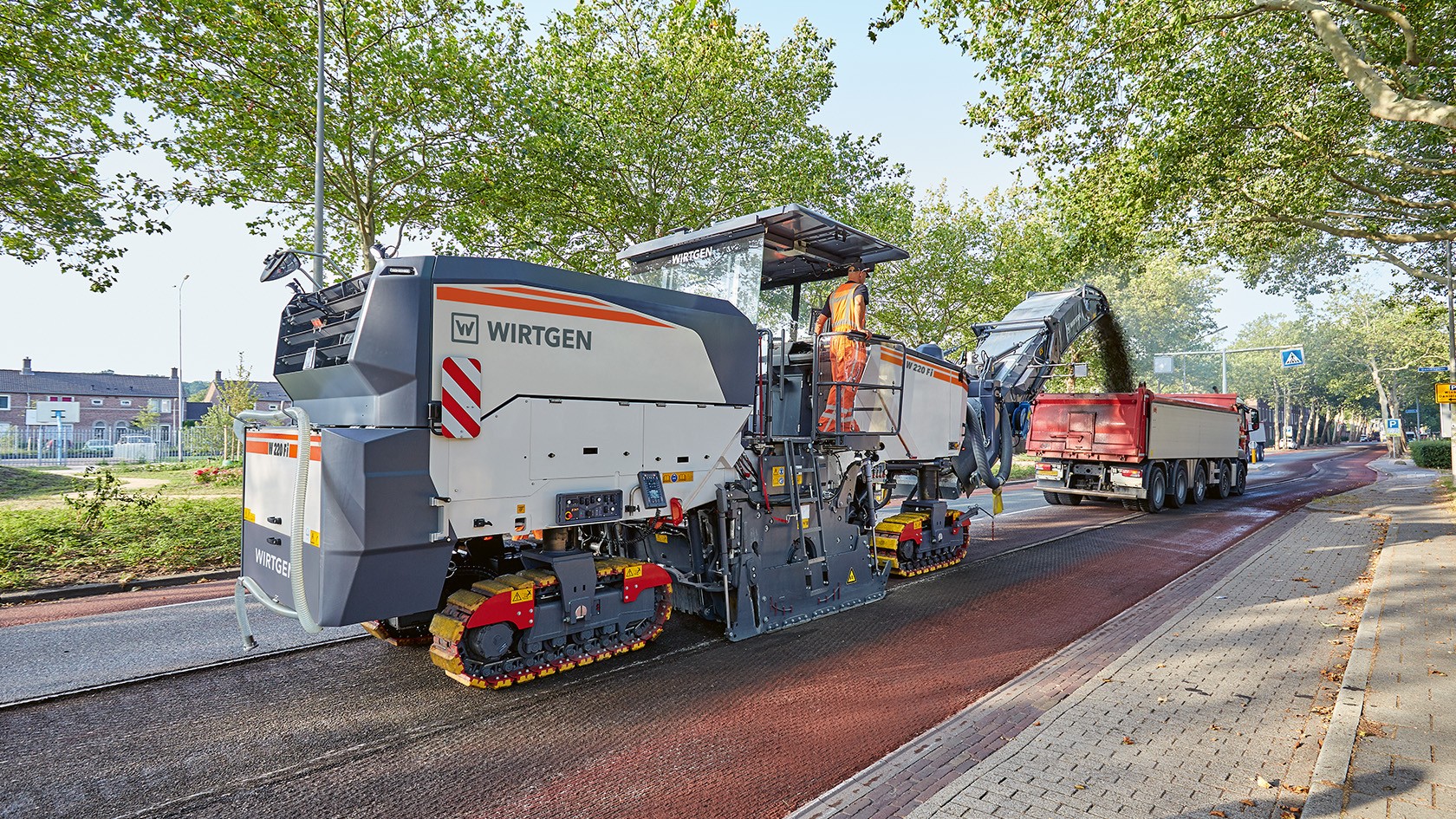
Mill Assist Digital Assistance System
Cost-optimization in ECO Mode
Smart assistance systems that aid machine operators and reduce their workload will shape the future of road construction, and are already field-proven realities at Wirtgen. In automatic mode, Mill Assist allows operators to choose one of three operating strategies – one of which is ECO mode, for cost-optimized machine performance.
It sets parameters that consistently ensure the most favorable balance between milling performance and operating costs This not only improves machine performance, but also considerably reduces diesel, water, and pick consumption, as well as carbon emissions.Mill Assist therefore makes a real contribution to efficiency and economy in road construction.

Efficient Utilization of Resources
The demands placed on today's cold milling machines are high: Alongside performance and quality, factors such as fuel and pick consumption and the reduction of local noise and CO₂ emissions also play a decisive role. In order to achieve the ideal working strategy for this, the operator must repeatedly check and readjust the individual machine parameters. Tasks that require considerable experience and extreme concentration. Preselecting the ECO mode operating strategy in Mill Assist significantly relieves the burden on the operator.

Mill Assist offers three operating strategies:
Depending on the operating strategy selected, the machine automatically adjusts the essential setting parameters.
ECO mode: Focus on cost-optimization
ECO mode is always the right choice when fuel and pick consumption costs must be kept as low as possible. For example, on concrete construction sites where the hardness of the material to be milled inevitably leads to increased pick wear.
In ECO mode, the system continuously adapts machine operating parameters to the properties of the road pavement being milled. The optimization of the parameters leads to a reduction of pick wear and the machine downtimes that would otherwise be required for replacing worn picks. Parallel to this, the fuel consumption can also be reduced. This is a prerequisite for efficient machine operation and can simultaneously contribute to the reduction of operating costs throughout the entire service life of a cold milling machine.
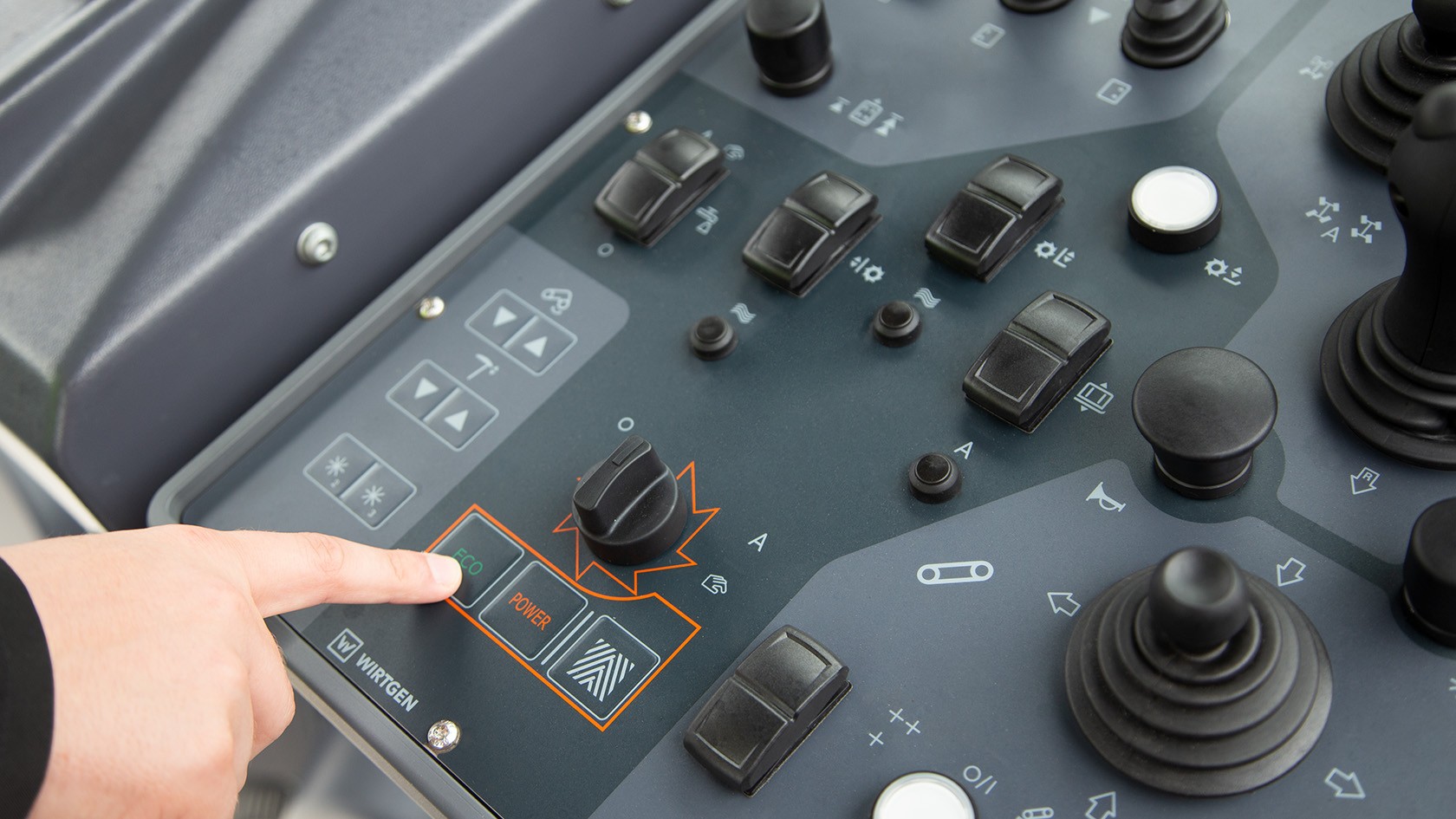
ECO mode: Easy to set
As the video shows, ECO mode can be activated simply by pressing the button. The system now determines the most cost-efficient settings – as can be clearly seen in the efficiency display on the control panel. As a quick look shows: at a low milling drum speed (green), the fuel consumption (white) and pick wear (red) are significantly reduced.

Highlights of ECO mode at a glance:
Mill Assist as a Key Component for Optimized Machine Operations
Mill Assist is already a standard feature of the large and compact milling machines of the new F series, and is one of the key components for cost-effective, efficient and sustainable working processes. In automatic mode, the assistance system always selects the most favorable balance between milling performance and operating costs. It automatically adjusts the engine speed, milling drum speed, travel drive, water system and machine advance speed improves the overall performance of the machine. The machine operator is kept continually informed about the status of the work and the current efficiency of the machine. Options for the potential optimization of milling parameters are displayed on the control panel and can be adopted if and when required.
