Smart road pavers

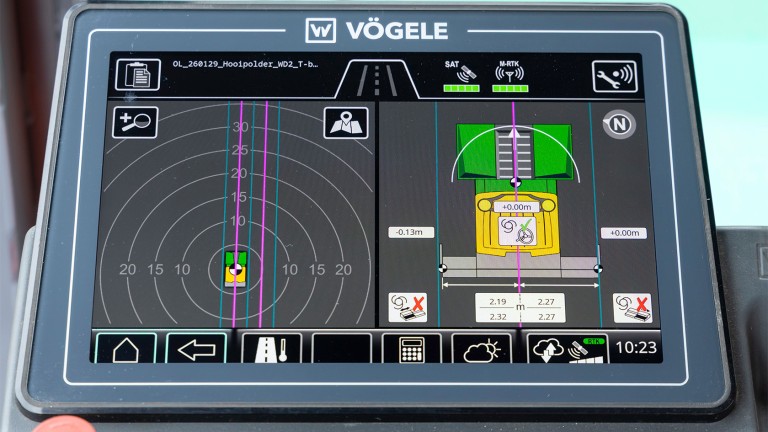
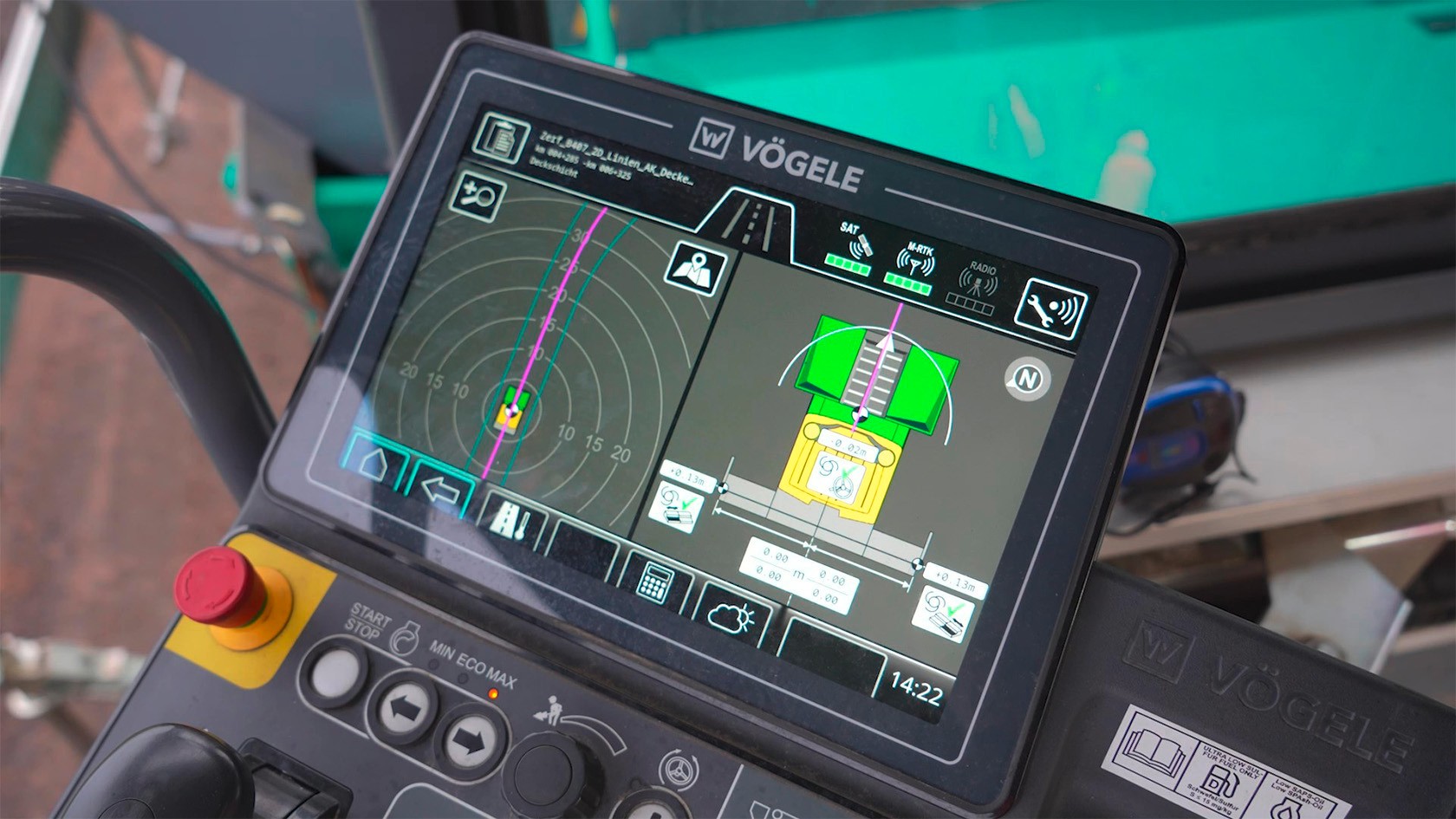
Display showing the Smart Pave assistance system

Automated steering and grade control

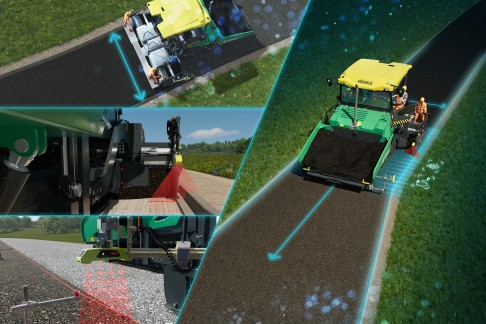
Automation solutions relieve operators, increase efficiency, promote process safety, and save material. With Grade Assist, AutoTrac, and Smart Pave, Vögele offers three smart assistance solutions: They control profile paving as well as the steering direction and paving width of Dash 5 road pavers.

Road construction companies around the world are facing growing challenges: A shortage of skilled labor, climate change, rising raw material prices, cost and deadline pressure, high quality requirements, and verification obligations are forcing companies to work with greater efficiency, precision, and resource conservation. Construction machinery with integrated automation technologies is a key factor in meeting these challenges. They take over routine tasks, reduce the risk of errors, and make workflows more efficient. Pavers in particular have significant potential because they directly influence the paving process and paving quality.

Smart assistance solutions for asphalt paving

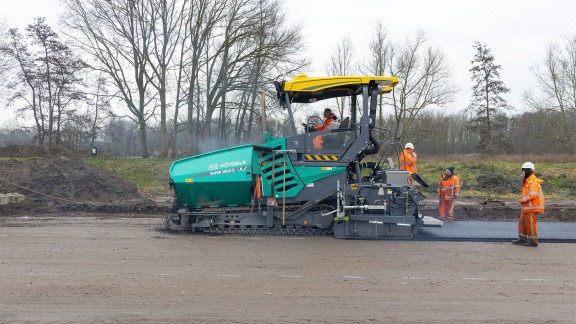
That is why paver manufacturer Vögele offers a broad range of digital construction technologies: Cloud-based Jobsite Intelligence solutions help construction companies collect and analyze relevant paving and paver data in real time and optimize the entire paving process. In turn, Smart Automation solutions assist paver operators with steering and grade control. “We design our machines to work as an ideal team with operators. The pavers take over routine or repetitive tasks so operators can focus on the paving process itself and on quality monitoring,” says Bastian Fleischer, Head of Product Management at Vögele. In combination with the Dash 5 generation, Vögele has introduced new solutions that automate grade control tasks as well as the control of paving width, paving direction, and paving position.

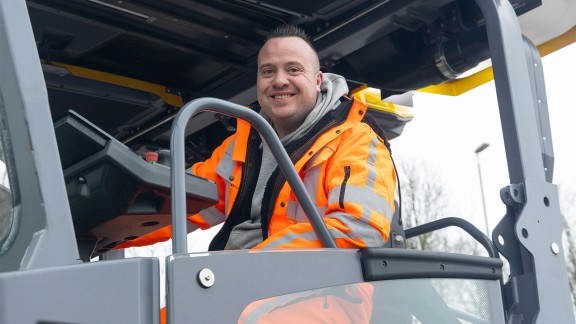
Portrait of Bastian Fleischer

“We design our machines to work as an ideal team with operators. The pavers take over routine or repetitive tasks so operators can focus on the paving process itself and on quality monitoring.”

Bastian Fleischer, Head of Product Management at Vögele

Grade Assist: Automated profile paving

The Grade Assist system simplifies the paving of crown profiles and transverse pavement profiles, and it supplements the existing Auto Grade Plus system for automated grade and slope control. Operators manually set the desired profile at a target point, the slope values, and the distance to that point on the screed console or the paver operator's console. After activating the function, the system for automated grade and slope control automatically regulates the smooth approach to the target values. This means users no longer have to adjust the slope gradually by hand up to the predefined point, helping prevent paving errors such as deviations in the asphalt mat. Especially when crown profiles and transverse pavement profiles change, the automation ensures optimal transitions and a uniform paving result. “By taking over slope control, Grade Assist reduces operator workload and allows operators to focus on monitoring the entered parameters and other quality-relevant factors,” says Fleischer.

“Users get a tool that helps them work with less stress – and gives contractors a way to boost productivity.”

Bastian Fleischer, Head of Product Management at Vögele

AutoTrac: Automated control based on physical references

If physical references such as edges, stringlines, or curbs are present, operators can also use the optional AutoTrac automated steering and width control system. It controls the paving width and steering direction of a Dash 5 paver using various sensors that scan real references. The solution from Vögele consists of four components that can be used individually in some cases or combined: Edge Control, Steering Control, Edge Detection, and fixed-width screed.

Stringline as a reference

If a stringline is tensioned to control the grade, it can also be used for the automated control of the paving width. To do this, the paver must be equipped with Edge Control and a sonic sensor. The screed operator activates the corresponding function, and the screed extension then follows the stringline automatically. For a constant paving width, only one stringline is required – the side of the screed without a stringline automatically extends and retracts as well. If stringlines are present on both sides, Edge Control can also handle a variable paving width. On tracked pavers, operators can also use Steering Control and a sonic sensor to automatically control steering direction along the stringline.

Edge as a reference

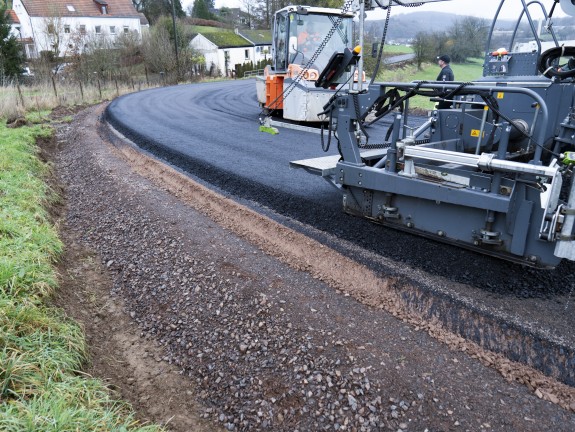
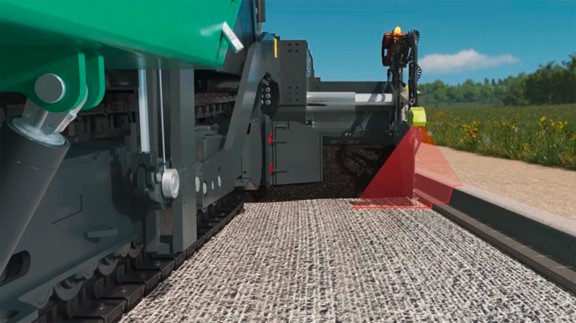
If milled edges, curbs, or gutters serve as a reference, paving teams can use Edge Control in combination with Edge Detection. The LIDAR sensor (Light Detection And Ranging) scans the area in front of the endgate and detects edges with a profile of at least 2 cm. When the screed operator activates the corresponding function, the respective screed extension automatically follows the edge. With this solution, paving teams can equip just one or both screed sides with the Edge Detection sensor, allowing them to achieve either a constant or variable paving width. Precise control along the reference enables accurate edge alignment. If the reference is present on only one side, the automated control prevents excess paving width – which can save significant material and costs, depending on the length of the project.

Smart Pave: Steering based on virtual references

Smart Pave takes automation a step further and is the all-in-one solution from Vögele: The integrated system automatically controls the paving width, paving position, and paving direction of the paver based on virtual references. The workflow is simple: The surveyor loads the CAD model of the route into the John Deere Operations Center™, the digital jobsite management system of the Wirtgen Group. There, the system automatically checks the data for plausibility. Before starting work on the jobsite, the operator retrieves the verified paving geometries via the touch display on the paver operator's console. The data is transmitted Over-the-Air via a cellular network connection, and the paver is automatically steered along the defined route after activating the job.

Precise paving and easy handling

The necessary hardware components are integrated into the paver: The StarFire dual-antenna system from John Deere determines the exact position of the paver, while the RTK modem calculates the correction value for the satellite positioning data and enables a high accuracy of ± 2.5 cm. “Smart Pave enables highly precise paving that prevents excess paving width and therefore saves material and costs,” says Fleischer. “Furthermore, the solution is efficient and user-friendly: Operators do not have to spend any time on installation, data handling is simple and transparent, and automatic error analysis helps deliver the desired result.” The automated control eliminates time-consuming marking work and increases process safety during paving. It also enhances operator safety: In difficult conditions such as darkness or confined situations such as live traffic, operators are under less strain, can work more attentively, and are more likely to move out of the danger zone.

Tolles Produkt
View of a screed with the Big-Multiplex-Ski sensor system.
Low effort, high impact

“Ultimately, our automation solutions pursue one goal: to make paving processes more precise, faster, safer, and more resource-efficient with minimal effort,” says Fleischer. Grade Assist, AutoTrac, and Smart Pave are therefore designed as simple, scalable solutions that can be used individually or together to meet a wide range of requirements in new construction and pavement rehabilitation. “Users get a tool that helps them work with less stress – and gives contractors a way to boost productivity.”

Automation solutions from Vögele

Press/media kit

Click here to download a ZIP file containing the press release in the available languages in Microsoft Word format and the images in 300 dpi resolution.

Download