Efficient Paving with the Edge Detection Edge Follower
Automated Screed Width Control
Construction company Eiffage Infra-Bau SE automated the screed width adjustment of its Dash 5 paver by following a joint edge with the Edge Detection laser sensor from Vögele. This ensures precise paving and reduces operator workload.Edge Detection is a part of the Vögele AutoTrac automatic steering and screed width control system.
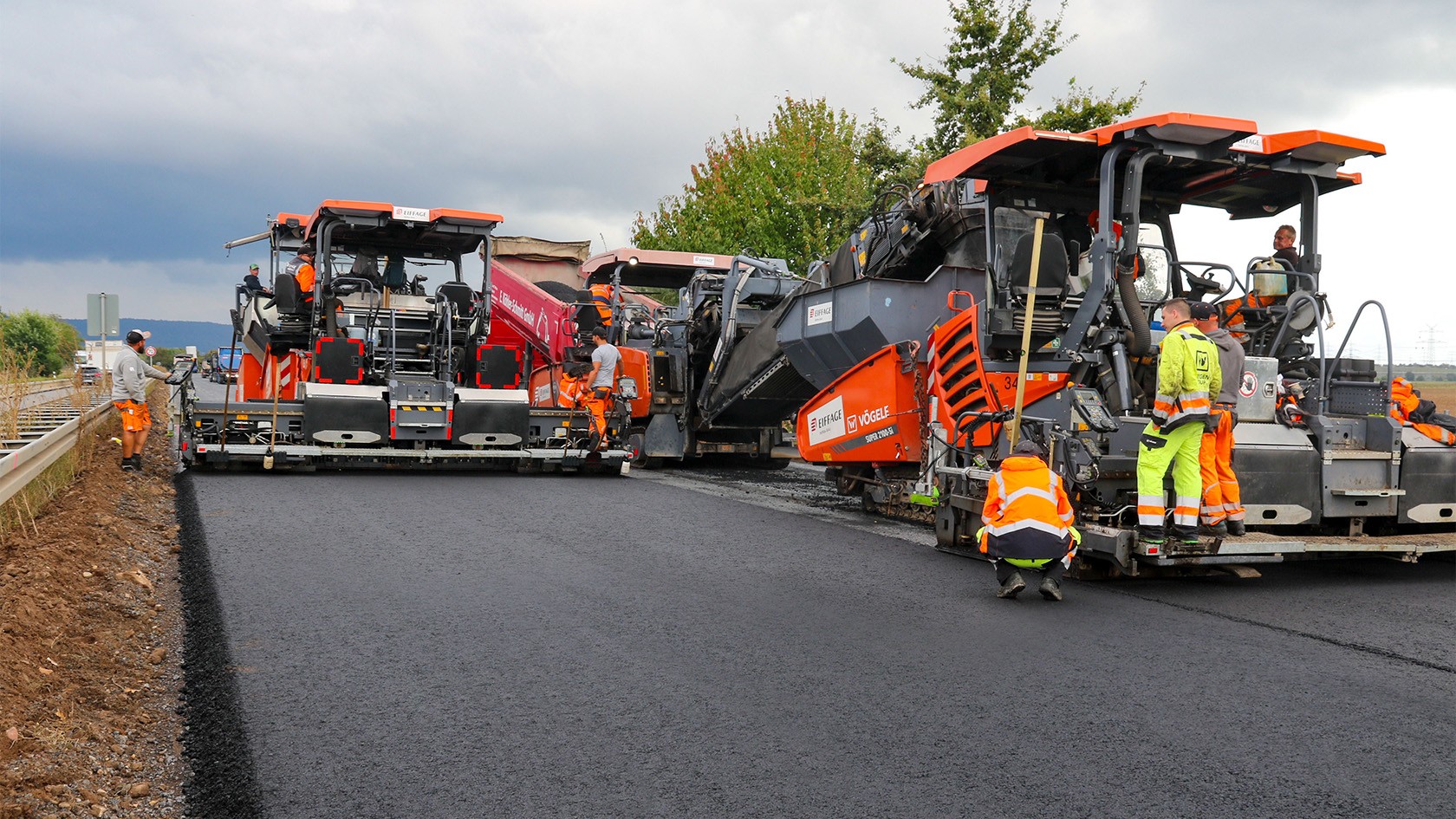
The B535 in Baden-Württemberg is an important bypass. Due to surface damage, a 1.6 km section near Heidelberg-Schwetzingen was badly in need of rehabilitation. To enable precise and rapid renewal of the two-lane section, the lead contractor decided to use staggered “hot to hot” paving with two Vögele material feeders and pavers in combination with the Edge Detection edge follower.
Rehabilitation of the Binder Course and the Surface Layer
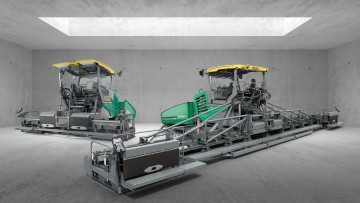
On the site, the construction contractor first milled off the damaged asphalt pavement down to the base layer. For the renewal of the 10 cm binder course and the 4 cm surface layer, the contractor deployed two latest-generation Vögele pavers: a SUPER 1900-5 X and a SUPER 2100-5 X. Two MT 3000-2i Offset mobile feeders ensured an uninterrupted supply of asphalt mix to the pavers.

“Hot to Hot” Paving with Edge Detection
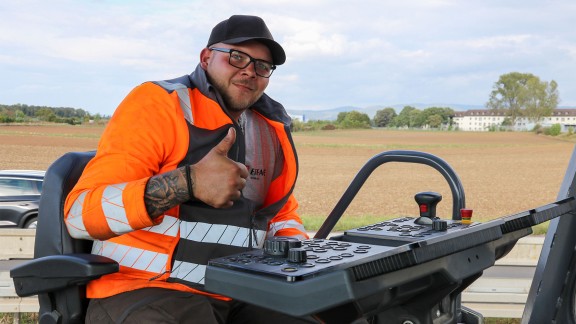
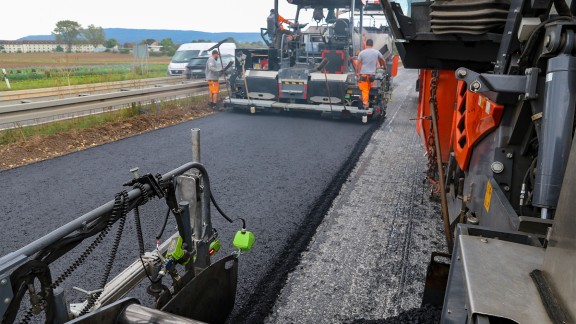
The paving crew first paved a strip alongside the central safety barrier with the SUPER 1900-5 X. This was followed by the paving of a parallel strip by the SUPER 2100-5 X, which was equipped with the Edge Detection edge follower: The laser sensor was attached to the left-hand endgate of the AB 600 paving screed and used the edge of the joint with the first strip as a reference datum for automatic screed width control. In concrete terms, it works like this: The sensor scans the area in front of the endgate within a 70-degree measuring range and detects edges with a profile of at least 2 cm. When the screed operator activates the corresponding function, the respective screed extension automatically follows the edge. “This allowed us to lay down the second strip very smoothly, precisely, and quickly,” says paver operator Michael Wenz.
Edge Detection Assists Paver Operators
The paving width on several sections of the federal highway varied between 8 m and 11.8 m. With a conventional paving process, the screed operator would have had to manually control the extension or retraction of the screed extensions. Thanks to Edge Detection, the screed width was, however, automatically adjusted to pave exactly the width defined by the detected edge. Meanwhile, the screed operator was able to concentrate on other aspects, such as assuring the quality of the paving result. On road projects alongside live traffic, automated screed width control enhances site safety by reducing the need for operators to work in hazardous areas.
“The Edge Detection laser sensor system provides valuable assistance by increasing the level of automation on the construction site. Nevertheless, the screed operator can make adjustments at any time if necessary.”
Michael Wenz, Paver Operator
Precision Paving Saves Costly Resources
A further benefit of paving with the Edge Detection sensor: the automated regulation of the screed width meant that exactly the right amount of asphalt mix was used to achieve an ideal joint between the strips laid down by the two pavers. “With Edge Detection, we are able to prevent overpaving, because the sensor reliably follows the edge,” says Wenz.
AutoTrac Edge Detection
Edge Detection is a part of the Vögele AutoTrac automatic steering and screed width control system. The automation solution utilizes real references that are scanned with sensors. The AutoTrac Edge Detection laser sensor utilizes a rising or falling edge as a reference, for example, the edge of a joint or a curb. The laser sensor mounted on the endgate automatically detects and follows edges with a profile varying by at least ± 2 cm.
Learn more about AutoTrac