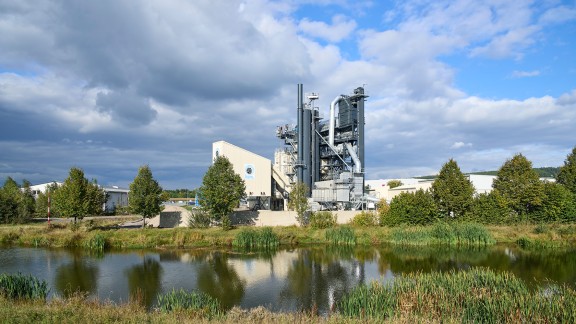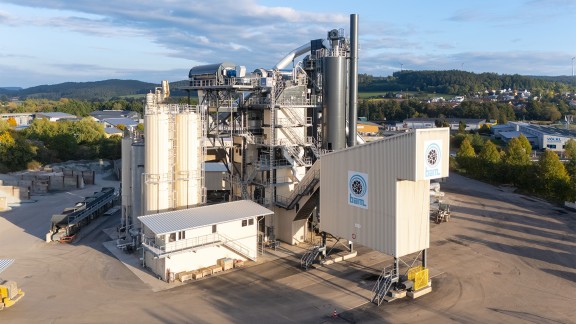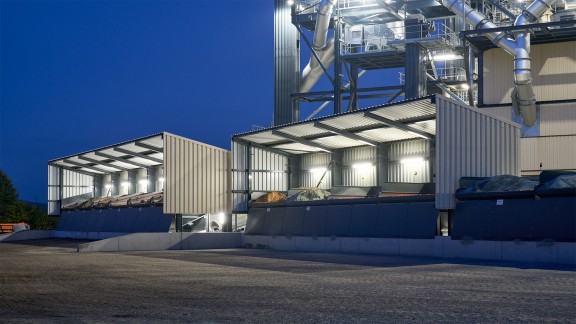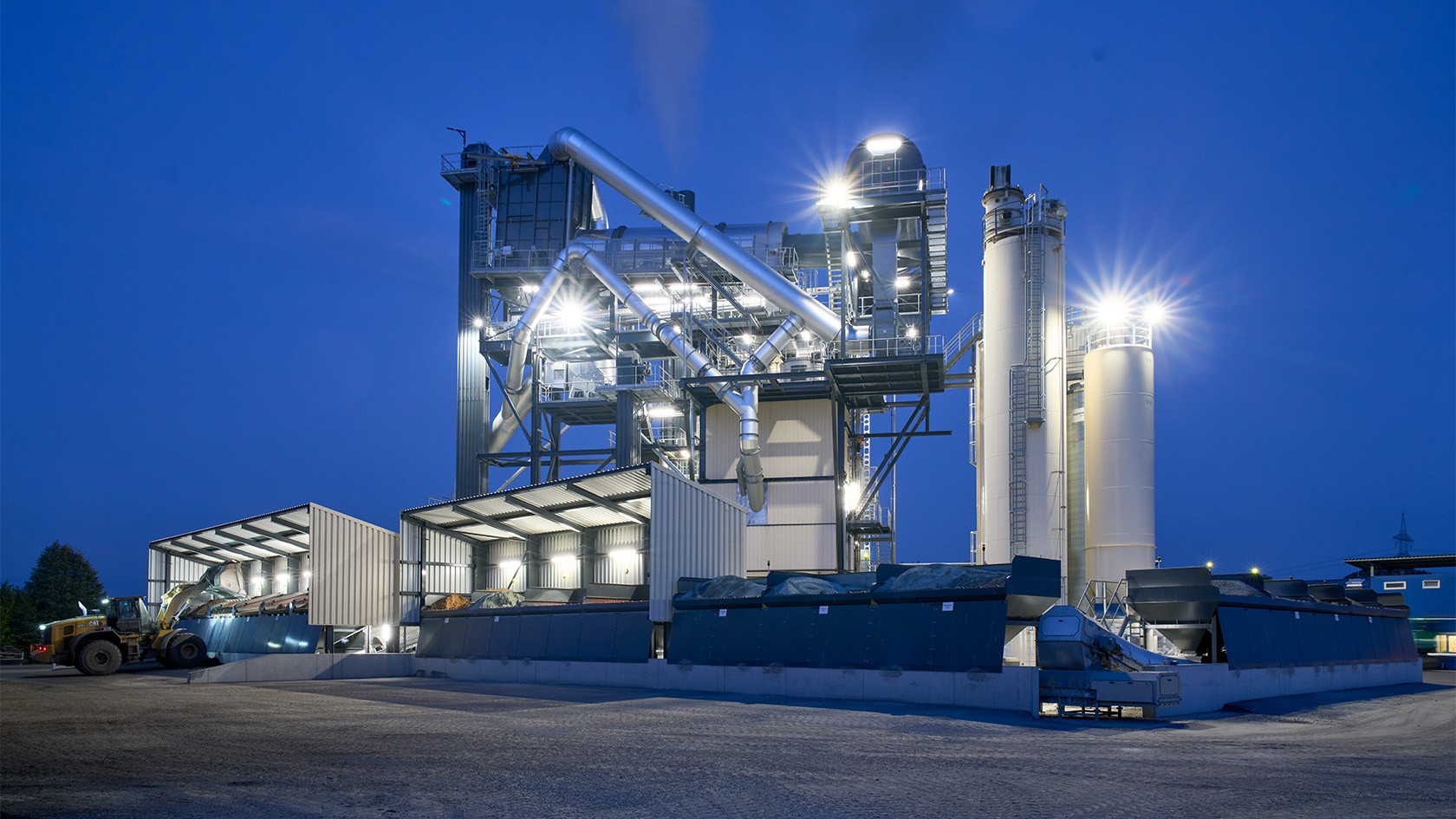
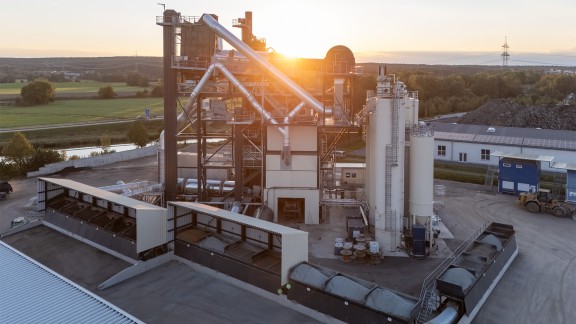
Front view of the RPP 3000 Plus in Luhe-Wildenau, late evening, the plant is lit up and the sky is a deep blue.

July 2026 | time to read: 5 minutes

Bayerische Asphaltmischwerke is investing in energy-efficient and cost-effective plant technology

With the commissioning of an RPP 3000 Plus, Bayerische Asphaltmischwerke is making its site in Luhe-Wildenau ready to face the latest challenges.

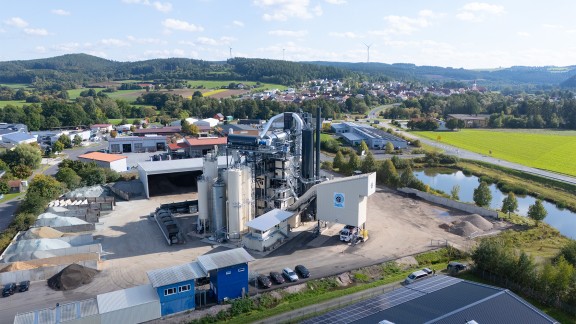
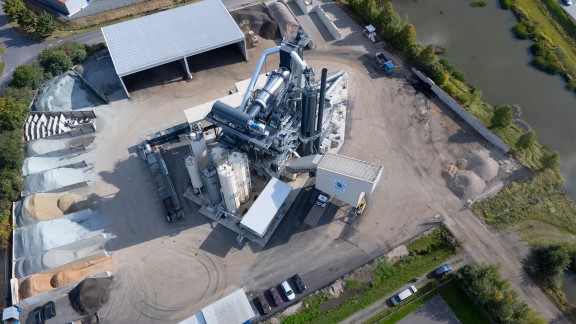
Bayerische Asphaltmischwerke (bam) has replaced its existing asphalt facility in Upper Palatinate, Bavaria with an ultra-modern Benninghoven plant featuring a lateral loading silo RPP 3000 Plus. With its integrated hot gas generator system, the asphalt mixing plant supports RAP recycling rates of up to 100% while simultaneously complying with operational emissions limits. The plant also enables the production of reduced-temperature asphalt by the addition of surface-active agents and the use of foam bitumen. Based on these resource-efficient solutions from Benninghoven, which can help reduce carbon emissions from asphalt production, bam is gearing up for future challenges at its Luhe-Wildenau site.

At the site in Luhe-Wildenau, bam is also making use of the latest BLS 4 plant control system
(Benninghoven control system), which features a new control design, lifecycle management, and a strong focus on cybersecurity.

Read more about the innovative plant control system.

Formed in Munich in 1969, Bayerische Asphaltmischwerke GmbH & Co. KG für Straßenbaustoffe (bam) is one of Germany’s largest producers of asphalt. Operating from 5 branches and around 40 production facilities, bam manufactures high-quality asphalt products capable of meeting a wide range of customer requirements. The company actively pursues cost-effective, lower-emission, and resource-efficient solutions in asphalt mix production, cooperating with partners whose technology helps meet these goals.
Proven partnership

Bayerische Asphaltmischwerke and Benninghoven have teamed up since the 1980s – recently on projects in Würzburg-Fuchsstadt and Mühldorf-Mettenheim – and always with the goal of combining efficiency with an optimal use of resources. For the new asphalt mixing plant in Luhe-Wildenau, Benninghoven proposed an impressive solution that not only fulfilled bam’s high standards for quality but also took into account the height limits for the plant and the integration of existing plant sections.

Advanced technology in Luhe-Wildenau

Asphalt mixing plants of the RPP type enable high RAP recycling rates, flexibility in production, and high product quality. Thanks to hot gas generator technology, high RAP recycling rates are possible, even with frequent recipe changes. This can help reduce carbon emissions in the production of new asphalt mixtures.

Optimised technology for handling RAP can reduce the need for fresh bitumen. As bitumen production is particularly energy-intensive, this reduction in use can lead to reduced emissions in asphalt mix production. The RPP therefore helps reduce energy consumption and improve resource efficiency.

Hot gas generator technology enables high rates of RAP recycling

At Bayerische Asphaltmischwerke, the recycling of reclaimed asphalt with the use of modern recycling technologies is a key part of its corporate philosophy. This is why the commissioning of the RPP 3000 Plus at the site in Luhe-Wildenau represents another milestone on the company’s path towards a circular economy: optimizing RAP recycling while keeping emissions low is only achievable with the counterflow process in the hot gas generator – and that’s why the Benninghoven plant with patented hot gas generator technology is the right choice here.

Find out more about hot gas generator technology

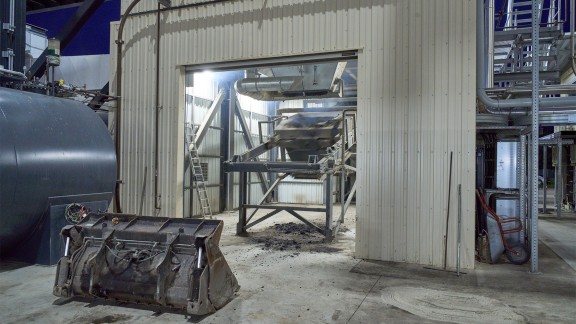
Hot gas generator with burner

Facing the future with reduced-temperature asphalt

The asphalt mixing plant in Upper Palatinate also features another key innovation: the weighing/mixing section in the mixing plant has been extended to include a foam bitumen module for producing reduced-temperature asphalt.

Updates to Germany’s core asphalt specifications (ZTV Asphalt-StB and TL Asphalt-StB) mark a fundamental shift in the industry. Recommended from the 2026 construction season onwards – and mandatory from 1 Jan 2027 – rolled asphalt must now be produced and installed at much lower temperatures. Reduced-temperature asphalt will therefore become the standard type. Tests have shown that the temperature can be reduced by up to 40 °C without any loss of quality. Apart from meeting legal requirements for occupational safety, this new industry approach also accommodates a wide variety of ecological and economic factors.

Go here to read more about reduced-temperature asphalt and the key role played in production by the Benninghoven foam bitumen module.

Reduced-temperature asphalt

Ready to meet any customer requirement

With its newly installed technologies, the company can look forward to a flexible future, and the ability to create a wide variety of products with optimum efficiency, precision, and process reliability. This product spectrum ranges from rolled asphalts in many different formulations to reduced-temperature asphalt. This versatility will ensure that bam can meet all of its customer requirements and use cases. This represents real economic value for the company: as a trusted road construction industry supplier, it needs to respond promptly to changing customer demands.

A focus on health and safety

Benninghoven asphalt mixing plants, which have an average service life of 30 years or more, are known not only for their high performance and quality, but also for putting employees’ needs at the forefront. It is they who each day ensure that customers are supplied promptly and reliably with the asphalt mix they require. The bam plant in Upper Palatinate is no exception: its ergonomic control concept and well-designed layout help ensure easy maintenance and good access to all components. The health and safety concept helps ensure safe work practices in day-to-day operations.

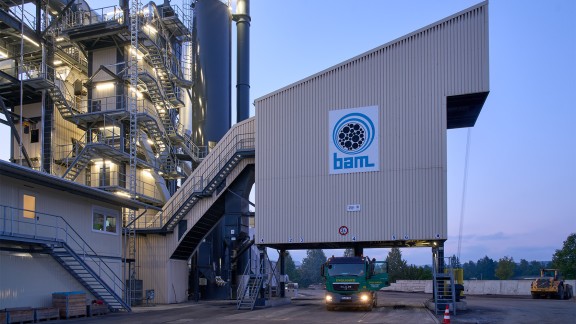
Plant seen against a cloudless sky
Highlights
  • Hot gas generator technology maximizes RAP recycling rates
  • Foam bitumen module for the production of reduced-temperature asphalt
  • Modern control software (BLS4 control system) with
    – Smart Weighing System
    – Recipe generator
Show more Show less
Additional customer requirements
  • Integration of plant components already existing on site
    – Neighboring mixed material storage silo
    – Dedusting
    – Bitumen tank
    – Heating oil tank
  • Integration of a PV system for bitumen tank temperature regulation
Show more Show less
Plant seen against a cloudless sky

For details and more information, please visit our product pages.