On the construction site of tomorrow
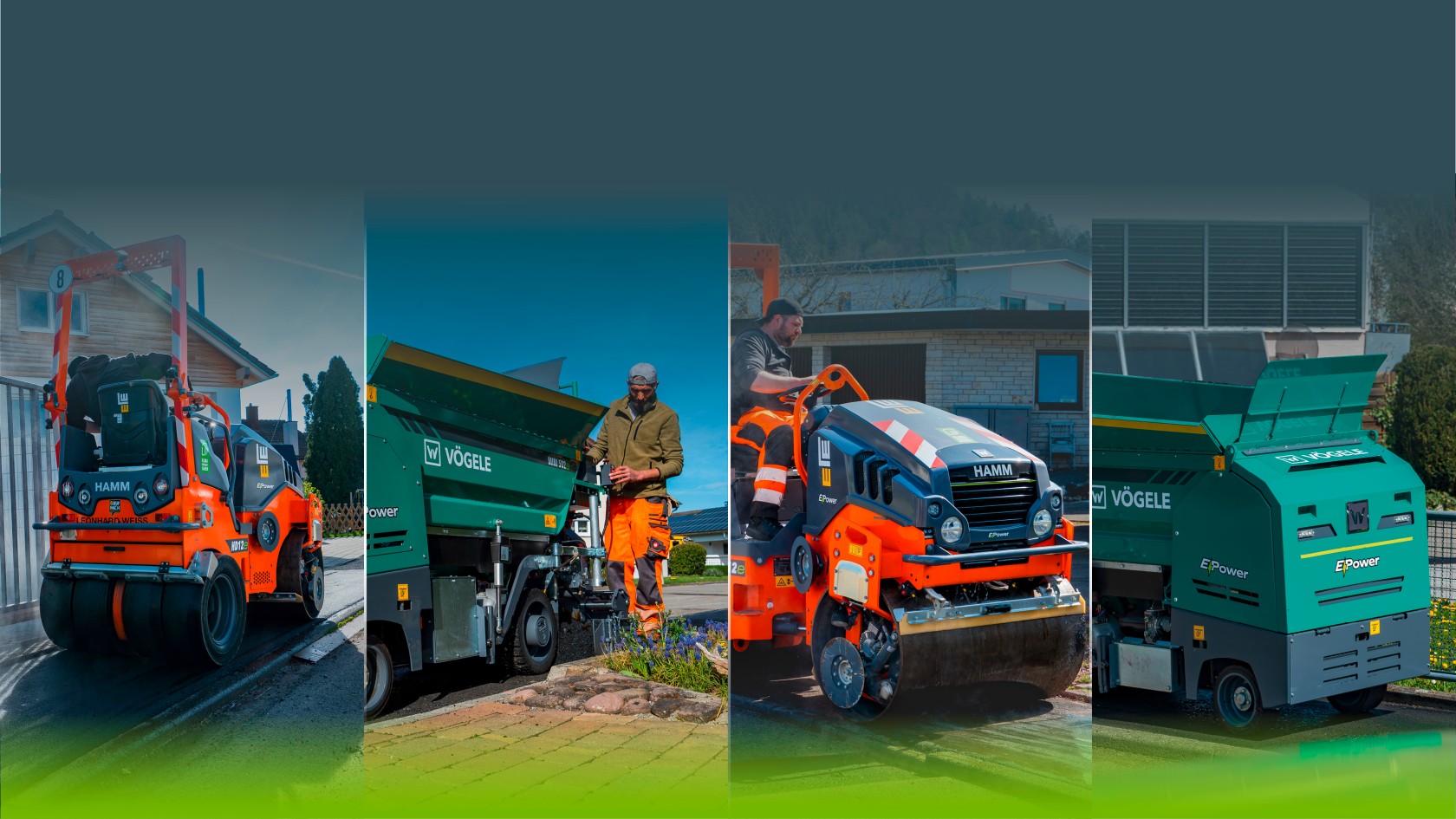
In Rangendingen, in the German federal state of Baden-Württemberg, Leonhard Weiss is counting on the concept of an all-electric construction site with e-machines from Hamm and Vögele to make the construction process safer and more cost-efficient and simultaneously reduce noise and CO₂ emissions.
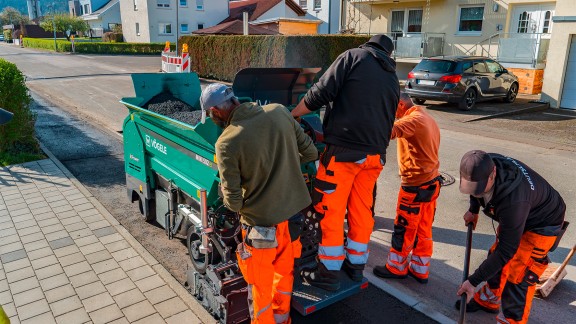
Will construction sites with purely electric machine power soon become the standard? What changes does this development bring to the construction process and how do employees and nearby residents benefit from this technology? Construction contractor Leonhard Weiss has already gathered initial practical experiences with electrically-powered construction equipment and now wanted to get to know more about it. In the course of a power grid upgrade project in Rangendingen, Baden-Württemberg, only fully electric machines were used, including a Hamm roller and a Vögele wheeled paver.
Pioneering project
The pilot construction site in Rangendingen is part of the ‘NETZbaustelle der Zukunft’ (GRID Construction Site for the Future) – an ongoing programme initiated by Netze BW., the largest grid operator for power, gas and water in Baden-Württemberg. The pilot project served as a test to determine which measures can be used to carry out tomorrow's construction projects with lower emissions, less noise, a higher degree of digitalisation and greater safety. On this and other pilot construction sites, the power grid operator is initially investigating the technical feasibility and the effects of the use of all-electric construction equipment on the construction process.
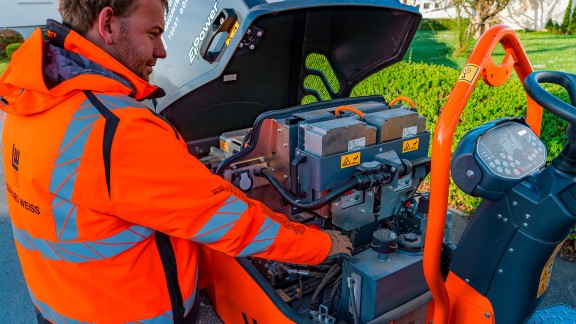
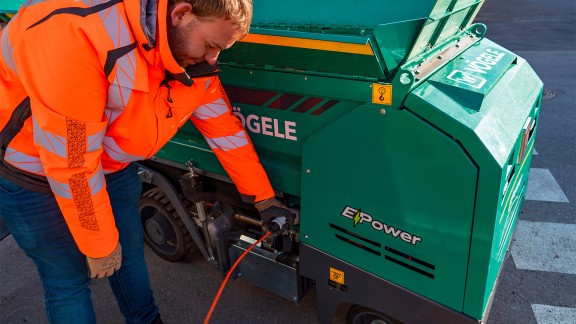
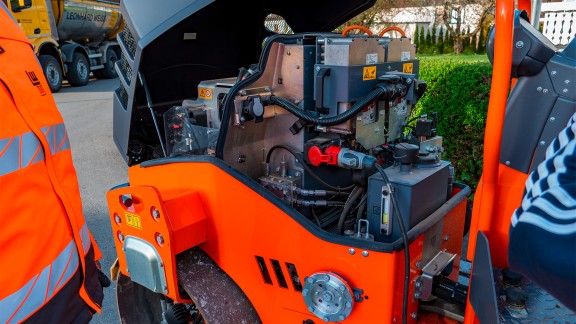
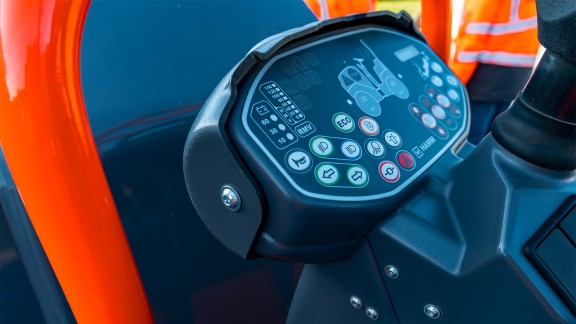
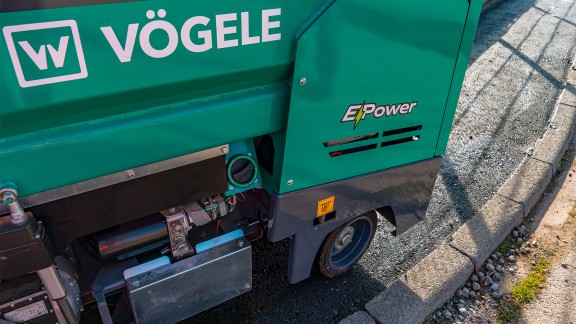
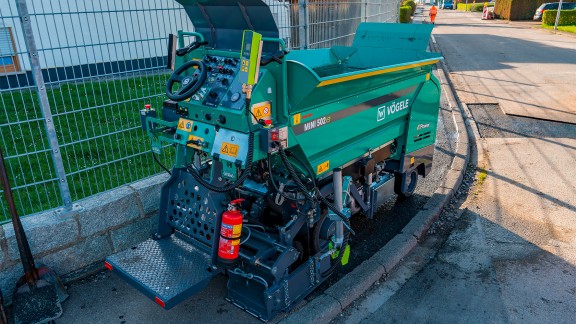
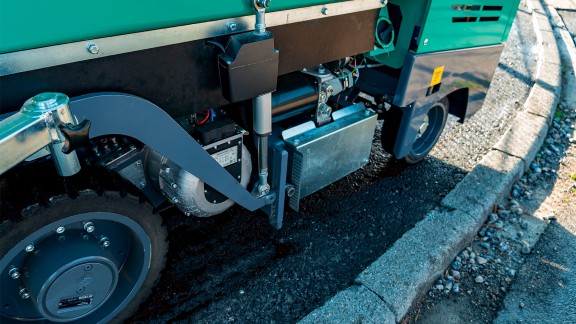
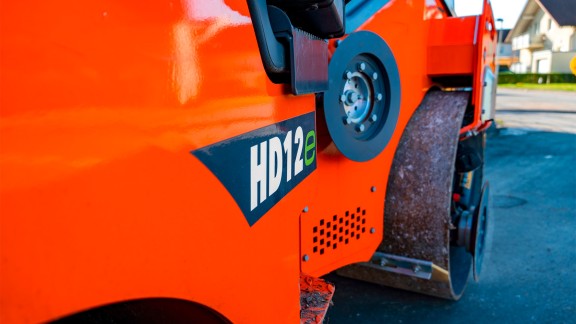
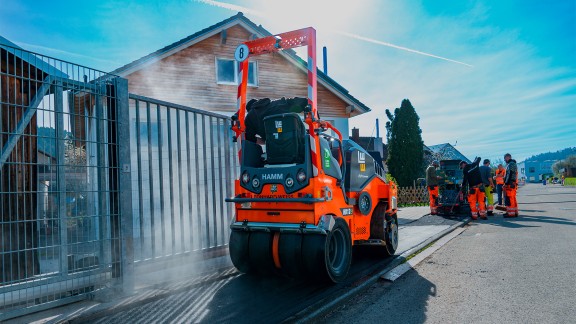
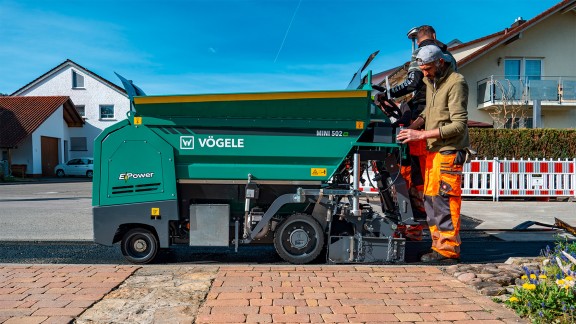
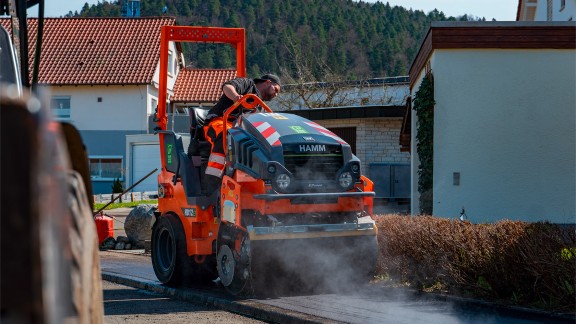
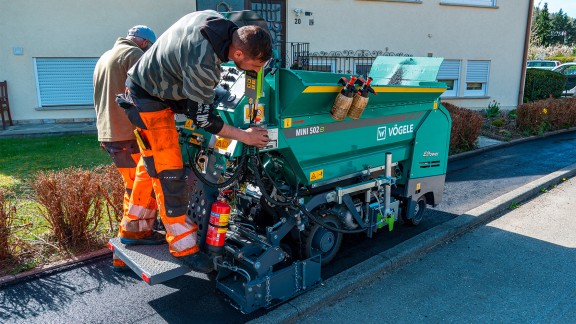
The road construction work followed on from the earthworks with electric construction equipment. Two new additions to the contractor’s fleet were used for the paving and compaction of the asphalt layer: a Hamm HD 12e VT tandem roller and a Vögele wheeled paver MINI 502e. The machines work with extremely low noise and local zero operating emissions, and are thus the ideal choice for use on urban construction projects with strict emission regulations. Their drive and material conveying systems and the wheeled paver's screed heating are fully electrically powered and are characterised by low energy consumption. The conclusion: both machines are in no way inferior to their diesel-powered counterparts in terms of quality and efficiency.
‘We are pleased to be able to contribute to the reduction of noise and environmental impacts here on the site through the use of all-electric construction equipment.’
Jean-Pierre Liedtke, Site Manager at Leonhard Weiss