Resurfacing a race track
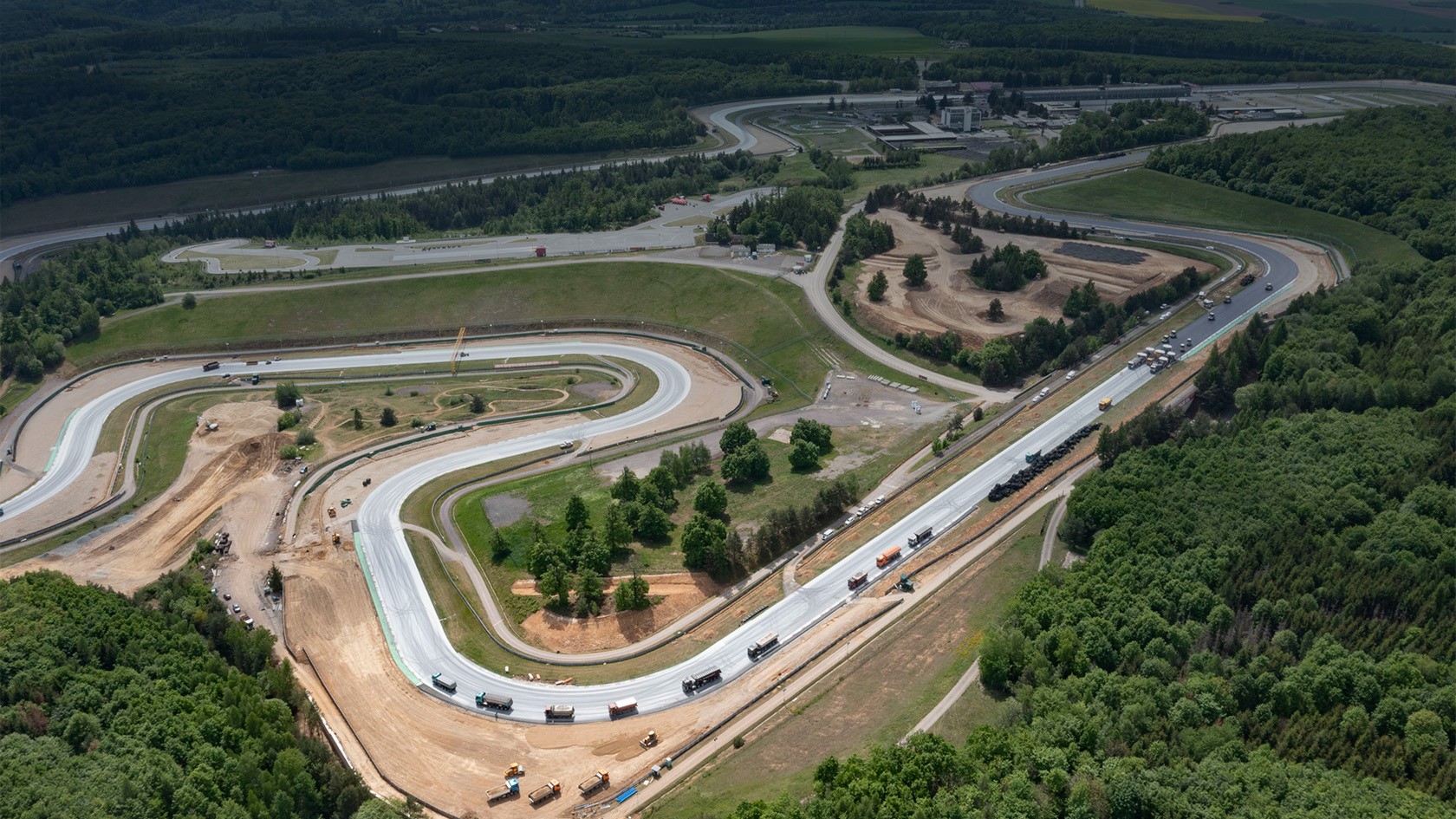
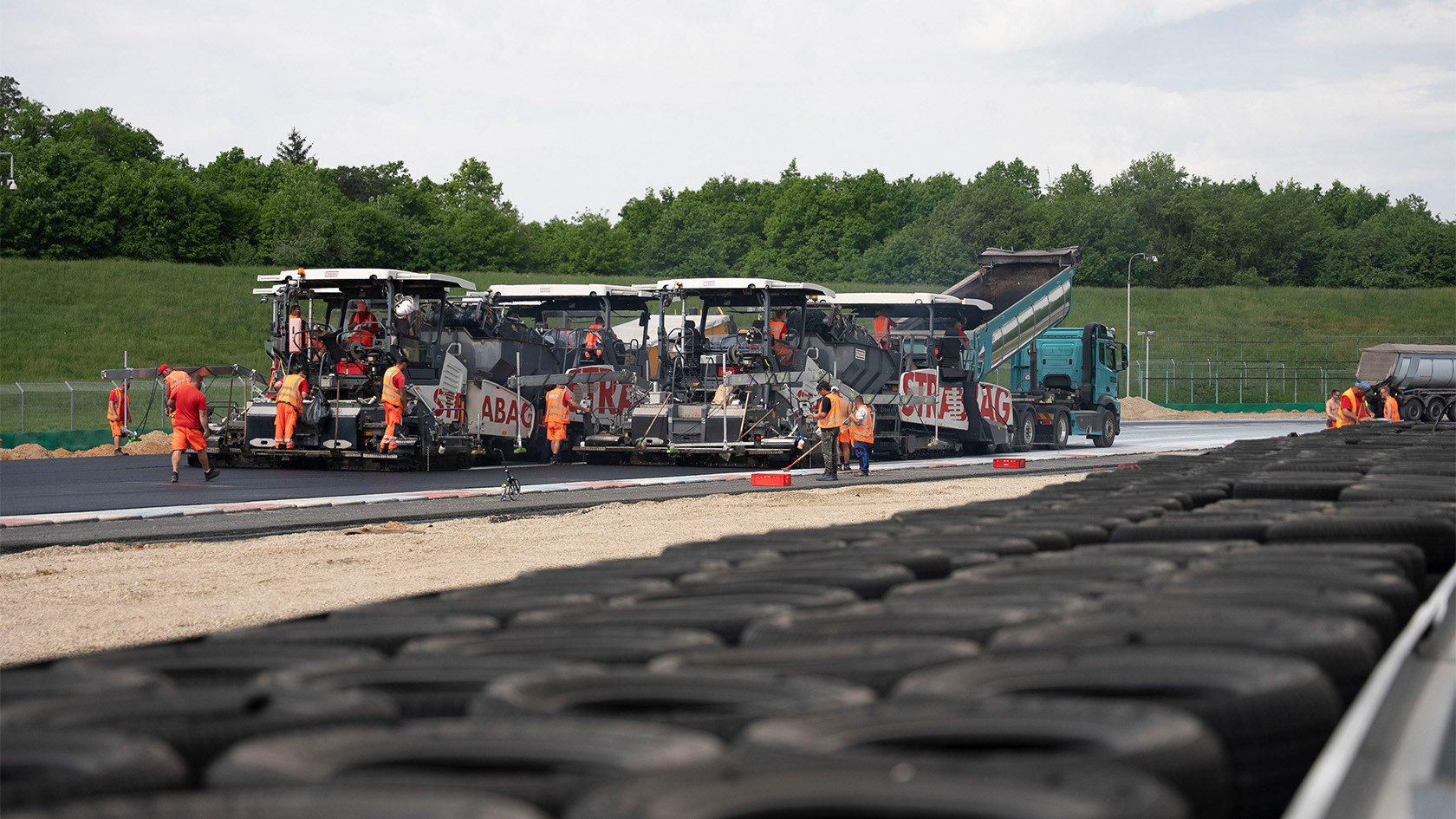
Six Vögele machines and a Benninghoven mixing plant used on Brno motorcycle race track
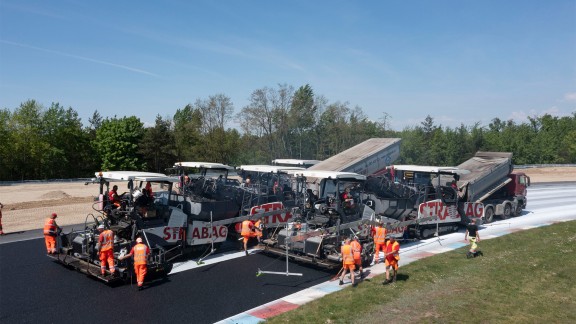
Whenever the town of Brno is mentioned, motor racing fans get excited. After all, races have been held here since 1930. After a few rather subdued years, the course is now back to its former glory. Both the infrastructure and the carriageway have been renovated. Riders are raving about the special asphalt, which was produced in a Benninghoven plant and paved by three Vögele pavers and material feeders.
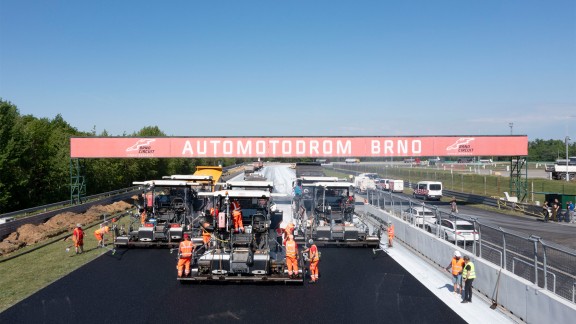
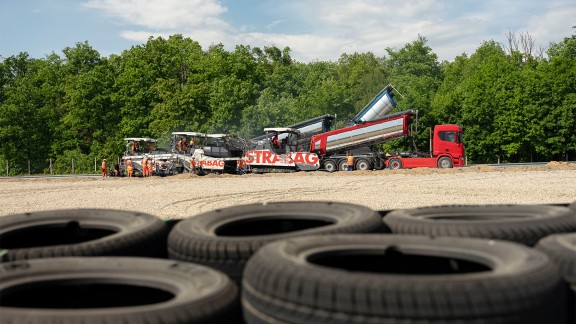
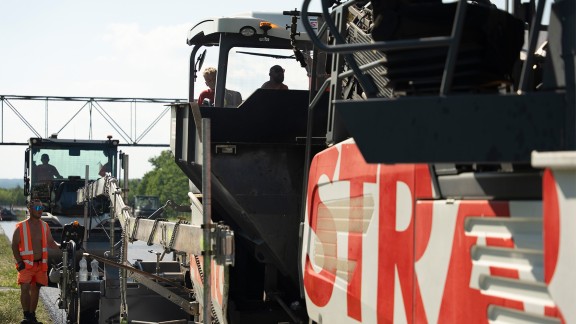
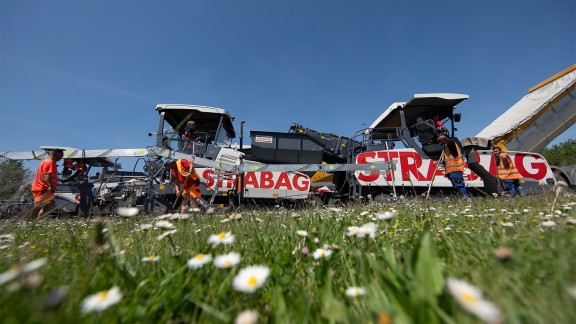
International race tracks have particularly stringent requirements for evenness, grip and a homogeneous texture, amongst other factors. Maximum grip and consistent evenness are key – as is the safety of riders travelling at speeds of around 300 km/h. All 5.4 km of the Masaryk Circuit in Brno were resurfaced: Three Vögele pavers and material feeders paved a 2.5 cm-thick level-regulating course and a 4 cm thick surface course across an average width of 15 m – on the Start/Finish straights, this width increased to as much as 17 m.
Apart from the precise specifications for both the asphaltic mixture and the paving process, the paving team managed by David Tejkal, Construction Manager at general contractor Strabag a.s., faced another challenge: ‘We had a strict deadline: The track had to be handed over two months before the Grand Prix.’ This meant a very short preparation period of just four weeks. The team could only work during the day, so 50 workers and 5 engineers were on site each day. ‘The tight schedule demanded precise coordination between all those involved, as well as utterly reliable, high-performance machinery,’ says Tejkal.
‘The tight schedule demanded precise coordination between all those involved, as well as utterly reliable, high-performance machinery.’
David Tejkal, Construction Manager at Strabag a.s.
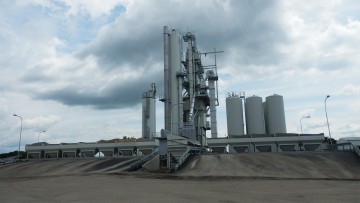
The first task was to find the perfect asphalt material to deliver the ideal carriageway surface offering better grip, making it faster and safer. Consulting engineers Hart Consult drafted a resurfacing concept for the track. ‘Among other things, we drafted project-specific specifications for all raw materials, the material composition, processes and quality assurance which were also agreed with FIM, the Fédération Internationale de Motocyclisme (International Motorcycling Federation) and we monitored the implementation of those specifications on site,’ explains Mario Peiker, Managing Director and Technical Director of Hart Consult International GmbH. Any deviation from these specifications would potentially impact performance and safety. The special asphalt was produced in a Benninghoven BA 4000 asphalt mixing plant from Brnenska Obalovna/Strabag.
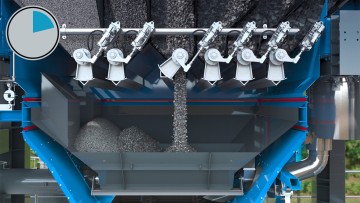
The Smart Weighing System from Benninghoven, a modern, intelligent dosing solution, proved ideal for this project. It has no sensors and teaches itself to dose with maximum efficiency and to minimum tolerances – even under varying conditions such as fluctuating temperatures or differing proportions of white mineral. The system reacts to the flow of material in real time, creating the conditions for managing the formula precisely – something which would be almost impossible using conventional methods. This renders the Smart Weighing System especially valuable wherever extremely low formula tolerances are required – such as in this project, where any deviation from the specifications would have an impact on performance and safety.
In order to use the Smart Weighing System, however, the first step was to integrate the latest version of the mixing plant control system BLS 4 from Benninghoven in the existing BA 4000 from Brnenska Obalovna. This control unit conversion was also completed in double-quick time as a result of close collaboration between Benninghoven, Hart Consult and Strabag. ‘It was really impressive to see how the new control software benefitted production precision. As we reduced production tolerances by almost 50% compared to national standards, these specifications could only be maintained using a perfectly calibrated mixing plant,’ says Peiker.
‘It was really impressive to see how the new control software benefitted production precision. As we restricted production tolerances by almost 50% compared to national standards, these specifications could only be maintained using a perfectly calibrated mixing plant.’
Mario Peiker, Managing Director and Technical Director of Hart Consult International GmbH