A major step forward.
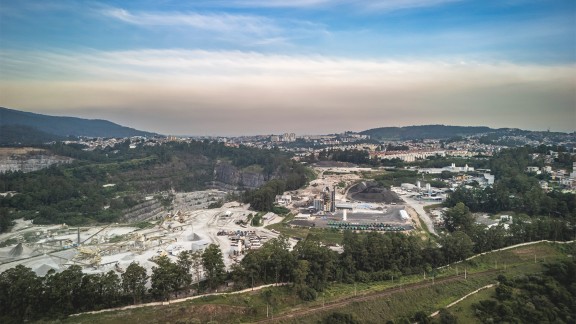
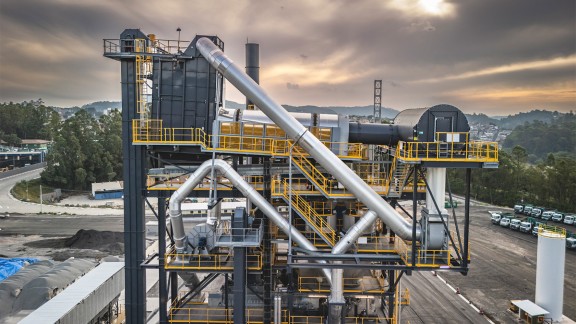
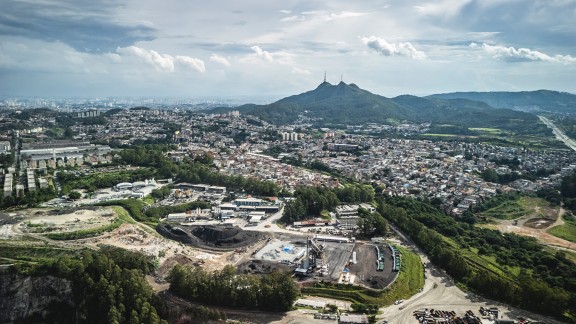
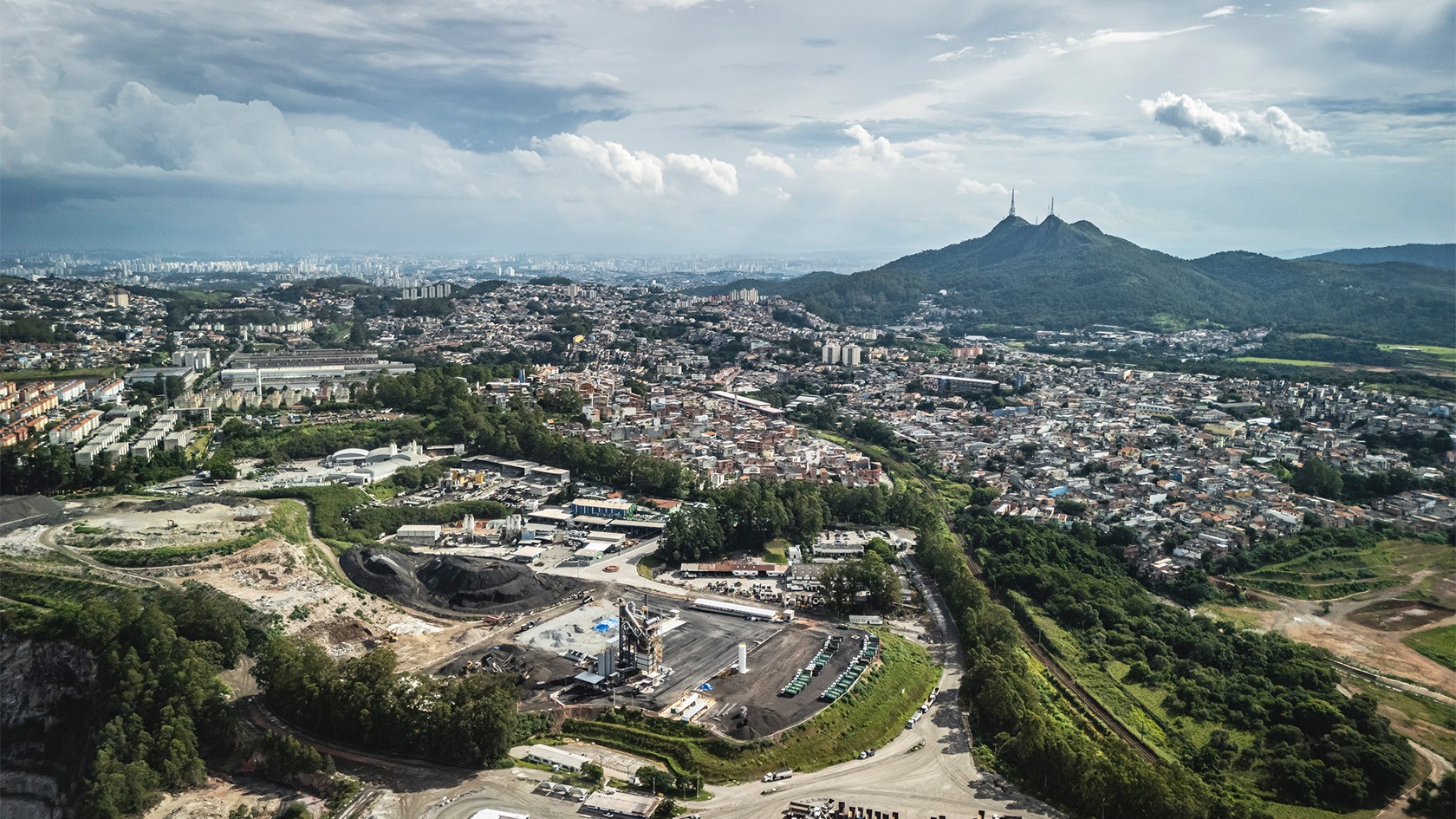
Aerial view of the RPP 4000 HG next to a quarry, with residential areas and hills in the background

Flagship project in São Paulo is revolutionizing the Brazilian asphalt market

In bringing an RPP plant online, Usicity is ushering in a new technological era in asphalt production in South America and leading the industry toward greater resource efficiency and economic responsibility.

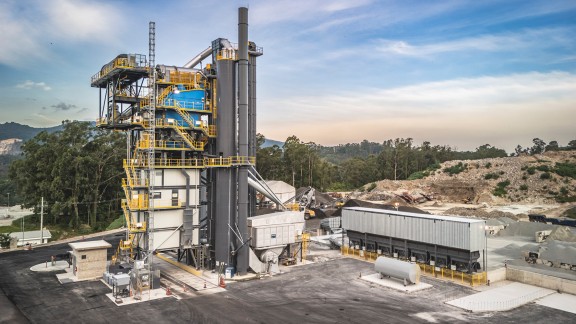
Pioneer and visionary: Usicity, a subsidiary of CITYS and construction and infrastructure giant Turita Holding Group, is the first company in the Southern Hemisphere to commission an RPP 4000 HG from Benninghoven, about 30 km from downtown São Paulo. With this move, the company is helping drive a fundamental shift in asphalt production in Brazil, by adopting modern technology that enables high recycling rates, promotes material reuse, and helps reduce carbon emissions from operations. All this results directly in high-quality asphalt mixtures that meet all the requirements for road construction.

Map with the location of Usicity

Major market potential for hot asphalt

The new RPP 4000 HG is located in the district of Jaraguá, approx. 30 km from downtown São Paulo. Greater São Paulo consists of 39 municipalities with more than 20 million inhabitants. These are interconnected by around 17,000 km of roads and intra-urban transport routes, as well as 1,059 km of highways, managed by a mix of concessions and municipalities. This represents major market potential for hot asphalt while guaranteeing a steady supply of reclaimed asphalt.

CITYS, with headquarters in São Paulo, was founded in 2002 and specializes in major construction and infrastructure solutions. The company is part of the Turita Holding Group, one of the longest-standing customers of Wirtgen Group, with the brands Concrecity (concrete supply), Intercity (prefab concrete parts), Servcity (project management, technical support), and Usicity – specializing in the production and supply of high-precision asphalt mixtures since 2010. Usicity’s five production sites also include the largest asphalt mixing plant in Latin America.

New ground for asphalt production

The use of RAP (hot recycling) in Brazil is still in its infancy. Milled asphalt material is often classified as hazardous waste and is usually not returned to the production cycle. Although the market increasingly demands alternative solutions, many municipalities and private road operators still have reservations about using mixtures with a high proportion of RAP. Usicity is committed to eliminating this bias and has adopted international best practices to strengthen the industry’s confidence in recycled asphalt pavement (RAP) and to trigger a rethink. The stationary batch plant from Benninghoven is playing a key role in this strategy. Able to operate at a high output with RAP ratios of up to 100%, the RPP 4000 HG is both efficient and economical. In addition, it can produce highly specialized mixtures – for technically complex applications such as highways and airports, but also for conventional roads, public transportation depots and more.

Ambitious targets

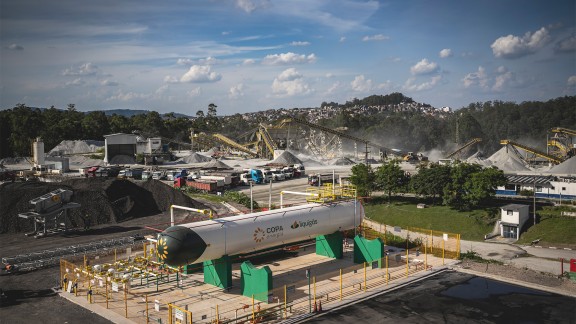
The RPP makes all the difference: Its innovative technology makes it ideal for the South American company to achieve their ambitious targets, which would not have been possible with the previous plant: Up to 1 million tons of high quality asphalt is set to be produced for the around 17,000 km of roads and intra-urban transport routes and for the 1,059 km of highways in Greater São Paulo – an enormous potential market and six times the annual production volume of a plant in Germany. In terms of infrastructure, conditions are ideal for this project: The quarry of partner company Riuma and a large RAP storage area are located directly next to the plant.

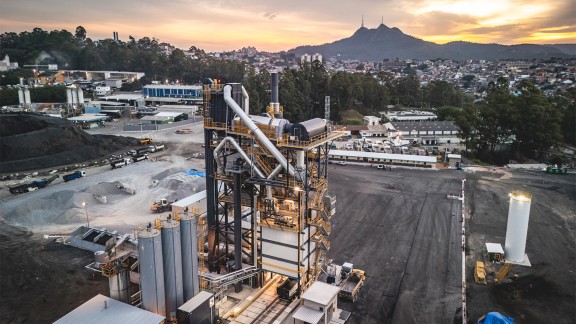
Good supporting infrastructure: The storage area for the RAP is located directly next to the asphalt mixing plant.

Only top quality will trigger a rethink

Usicity knows that confidence in RAP has yet to be established and grow in the industry. Advanced road construction with RAP is possible only if the quality of the mixtures meets the high requirements for the properties of roads: durability, safety, driving comfort, and a reduced need for repairs. The mixtures produced by the RPP 4000 HG meet these criteria in all respects – confirmed in regular laboratory tests and material inspections.

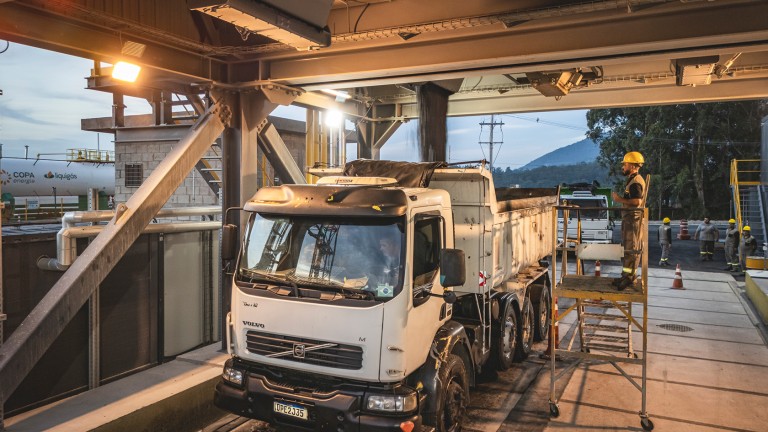
Right: Temperature check = quality check

Tolles Produkt

Batch plants: advanced technology for efficient material use

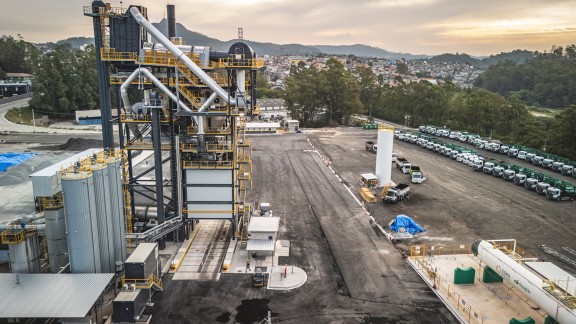
Already the standard in Europe, they are quickly gaining ground in Brazil: Batch plants precisely dose and mix the individual components in defined batches. This creates a high degree of flexibility as the mixing recipes can be individually adapted to the requirements of the construction site, while the exact dosing and precision control produce exceptionally homogeneous high-performance asphalts of excellent quality. Usicity can develop customized asphalt recipes – from standard mixtures to highly specialized formulations.

Asphalt production with batch processing

Partnership and innovative thinking are making the change possible

Nothing gets done without commitment and strong partners. The excellent and close collaboration with Ciber and Benninghoven was a key factor of success from the start. There has been a close business connection with Ciber via the Turita Holding Group for many years, also leading to initial contact with Benninghoven.

The Bauma 2022 exhibition offered the Brazilian company the opportunity to tour several reference plants in Germany before committing to the investment, including at Knäble in Biberach. The focus was not only on the operation and strong innovation of the plant, but also on after sales service, training and technical support.

Once the decision to purchase was made, everything went smoothly and quickly, with employees receiving in-depth training well in advance. The training focused on the BLS 4 control system, including the recipe generator – two key components for safely and efficiently running the plant. Installation and commissioning were managed by experienced Benninghoven supervisor Karl-Heinz Würges with the local team. This means that any mechanical adjustment can be done by the local plant personnel in the future. Technical issues relating to the control system, such as the burner and automation, are handled by Ciber for first level support or remotely by Benninghoven in Wittlich, Germany. As the icing on the cake, Usicity was also provided with an extensive spare parts package of genuine parts, which are stored directly next to the plant.

Contact with Benninghoven is ongoing, including after commissioning. While the RPP plant type has long been standard in Germany and Western Europe, it is still a novelty in Brazil and all the experience being garnered is deliberately getting very close support – on the principle of being “Close to our customers”.
“Implementing a project of this magnitude at the other end of the world comes with a range of very different challenges. Thanks to the highly committed work of the entire Benninghoven team and excellent collaboration with our partner Usicity, we have solved them all successfully”.

Daniel Siebrecht, Technical Director Benninghoven, and Christian Bode, Head of Project Management at Benninghoven

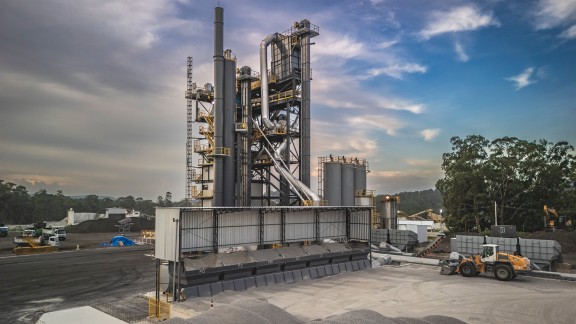
The RPP 4000 HG is a flagship of Benninghoven and the symbol of a new era in technology for asphalt production in Brazil.

Investing in Brazil’s shift toward recycling

By using recycled asphalt, processes with lower emissions, and resource-efficient production methods, Usicity is working to make asphalt with high RAP content a standard option across Latin America. With the RPP 4000 HG, the company is already perfectly positioned for the future. This can deliver the high production capacities that are required, achieve increasing RAP ratios, which are currently still low, and – thanks to state-of-the-art hot gas generator technology – already meet exacting emissions standards.

Usicity is now planning to make another key green investment with the deployment of hydrogen as a burner fuel. Thanks to its high energy density, hydrogen is an effective fuel for heating and, depending on its source and the way in which it is used, can significantly reduce carbon emissions from operations. Once again, Benninghoven is the ideal partner for this step. A generation of burners capable of running on 100% hydrogen has been available as a standard option since April 2025, giving asphalt production another major boost in innovation. The technology can be used as a Retrofit solution for existing asphalt mixing plants, meaning that the Brazilian company can change over at any time.

Role model and pioneer for South America

Usicity has made its vision for the South American region a reality. The new plant exceeds all expectations, proving that high-performance asphalt production with state-of-the-art recycling technology is setting new standards in terms of quality and efficiency. This was and is a bold step in a market that still needs convincing. But it is also a step that is setting an example for the entire industry.

The RPP 4000 HG:
energy-efficient and
cost-effective.

Facts and figures for the RPP 4000 HG in São Paulo
Mixing capacity
Per hour:
320 t
Per day:
4,000 t
to 5,000 t
Silo capacities
Dried virgin material
60 t in
6 containers/
bins
Mixed materials (asphalt)
325 t in
5 containers/
bins
RAP silo
50 t
Hot gas generator
Ratio of added RAP:
Up to 100%
Burner
Dual fuel burner:
Heating oil, liquefied gas
Installation
Period:
11/2023
to 06/2024
Commissioning
Period:
06/2024
to 08/2025

Read here how the RPP 4000 is setting new standards for the future trend in asphalt recycling in southern Germany.

RPP 4000 in Biberach

For details and more information, see our product pages.

Media & Press

You can download a ZIP file containing the press release in the available languages in Microsoft Word format and the images in 300 dpi resolution.

Download