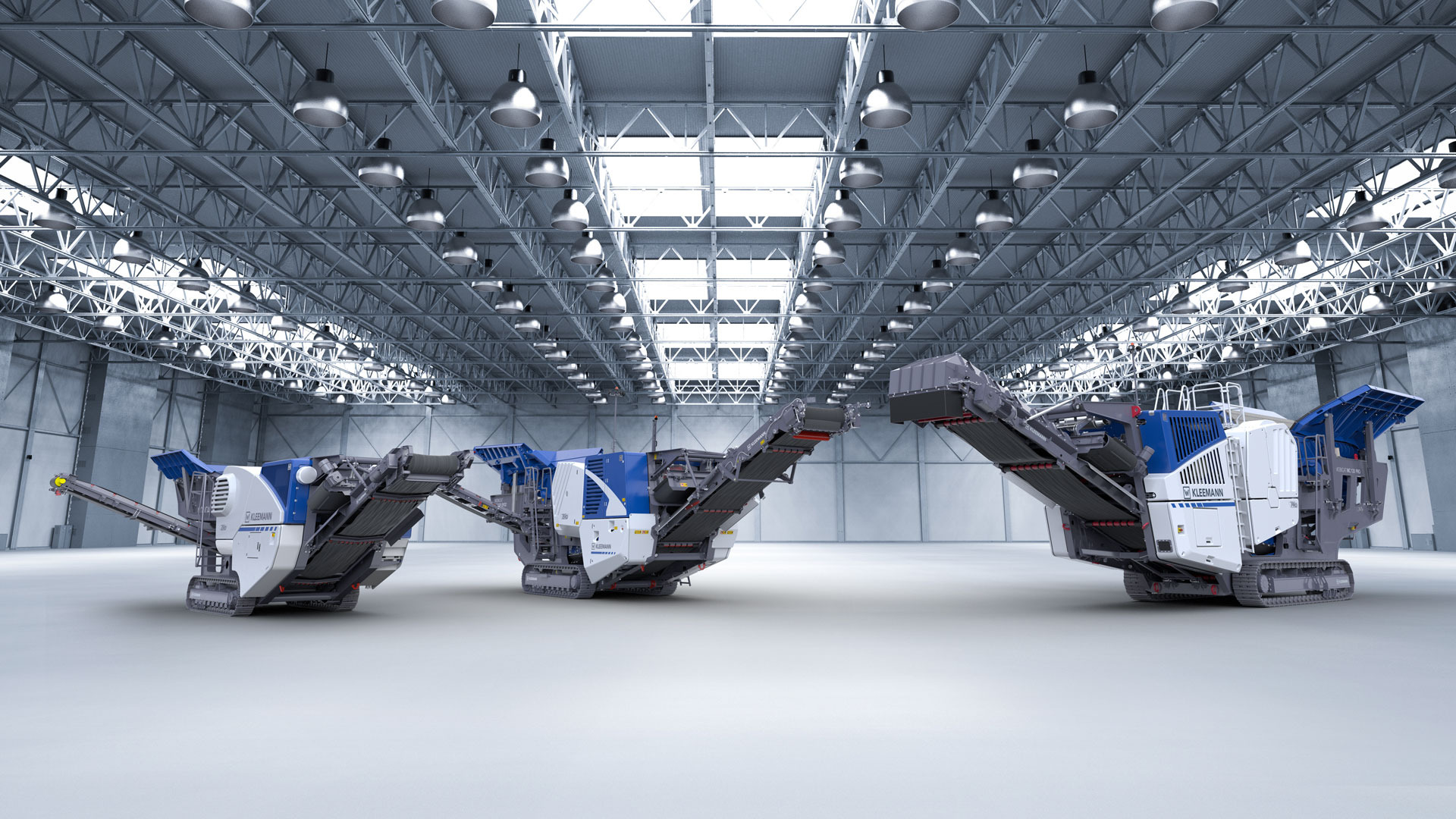
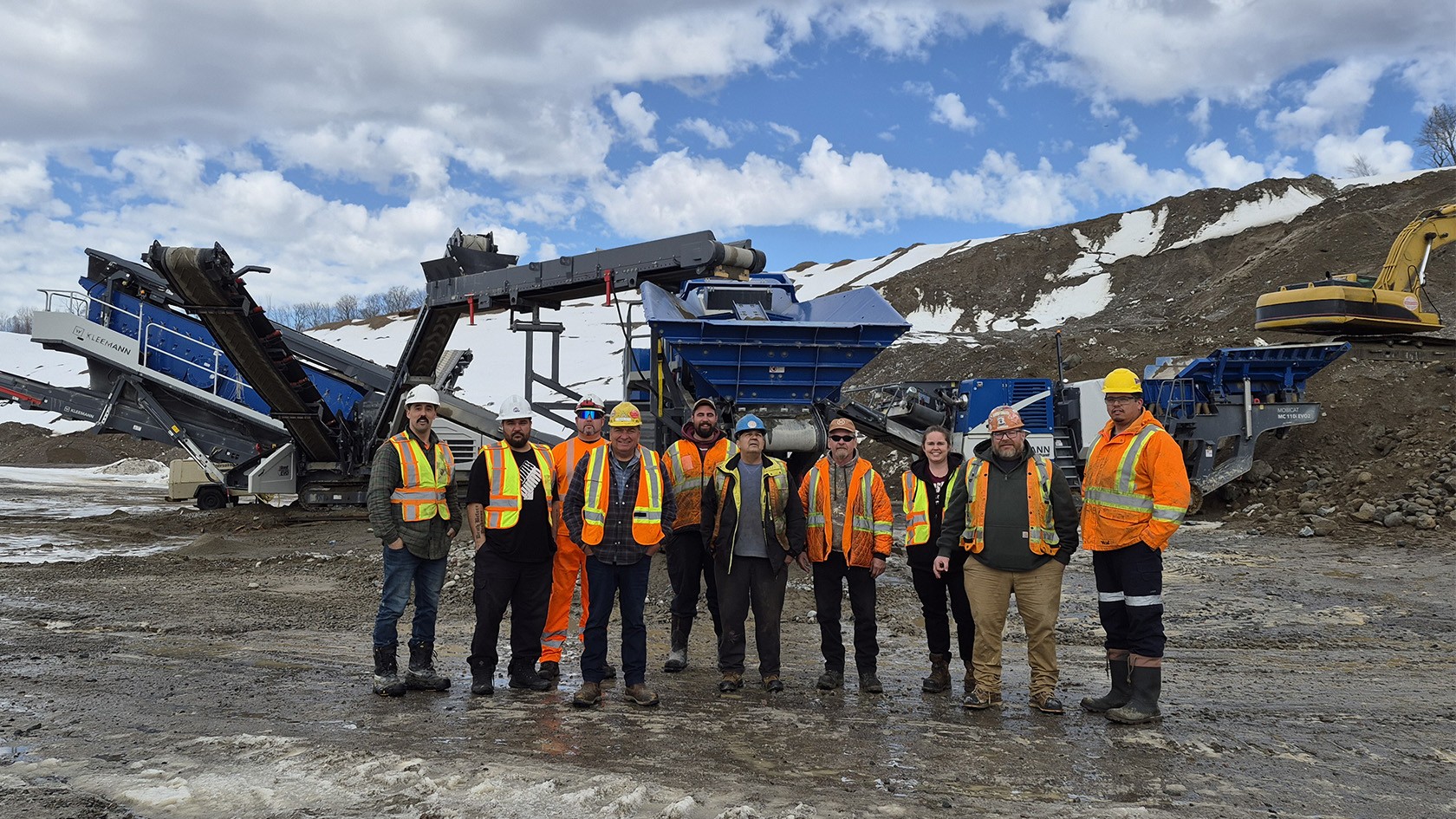
Group portrait in front of a Kleemann plant

August 2026 | Reading time: 7 min

Building a bright future on hard rock

Advanced technology from Kleemann is helping to revitalise an Indigenous community in Canada

The Garden River First Nation, an Indigenous community in Ontario, Canada, founded 176 years ago, is currently attracting a lot of people to return to the reserve. The reasons for this are new employment opportunities and the community’s positive development. The production of aggregates plays an important role here. State-of-the-art plant is helping secure economic growth and generate sustainable income. The profits generated from the operations are reinvested within the First Nation to create new jobs, new housing and new perspectives for the future.

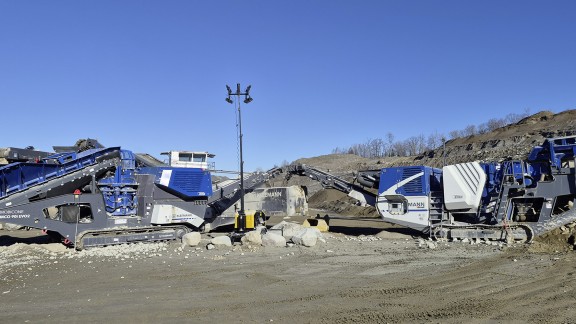
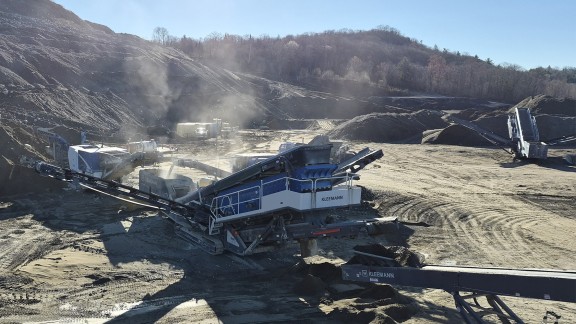
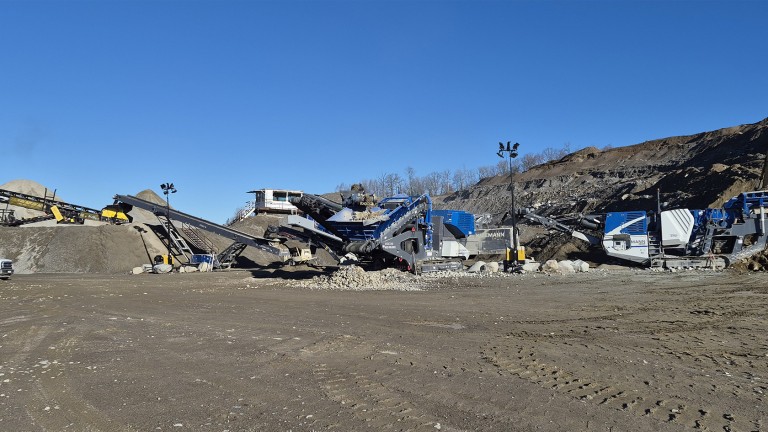
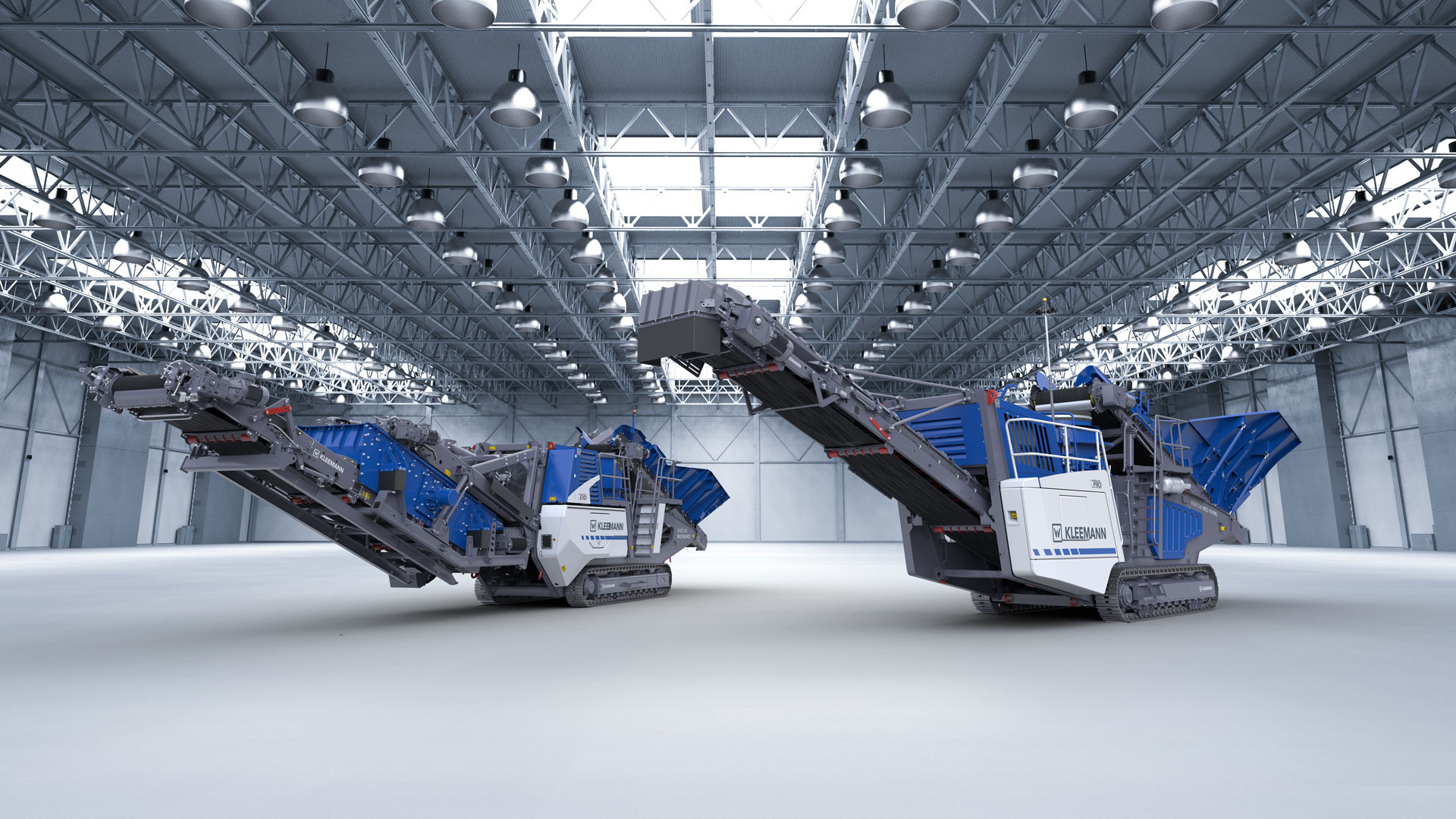
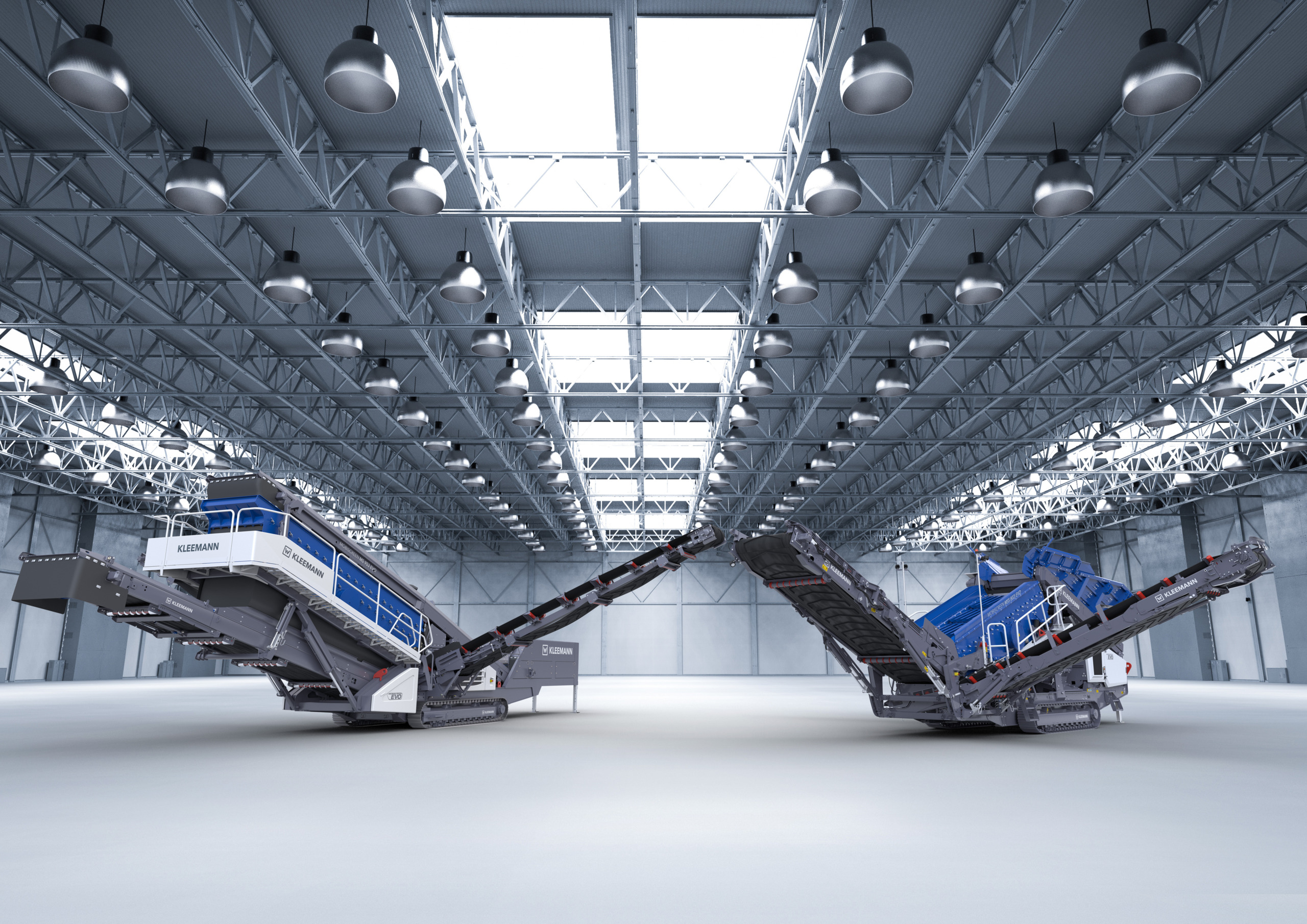
As part of a current project, Garden River is supplying aggregates for the 16-kilometre section of Highway 17A, which runs directly through the reserve and also serves as a bypass for the Trans-Canada Highway. In order to fulfill demands in terms of tonnage and grain quality, the community has invested in a fleet of Kleemann machines consisting of a jaw crusher, two cone crushers, two screening plants, and a stacker.Depending on the specifications for the final product, the machines operate in combination as primary, secondary and tertiary crushing and screening plants.

Location map

Indigenous communities in Canada are vital to the fabric of the nation as a whole, as they preserve Indigenous culture, language and family ties. In some communities, however, the population is shrinking, as many members are drawn to larger centres where there are more educational opportunities, jobs and housing. Based in Garden River 14 (700 kilometres northwest of Toronto), the Garden River First Nation (Ketegaunseebee in the Ojibwe language) is made up of 3,500 band members. A little over 1,000 people live in the reserve. Of those, 200 are employed by the community itself, 13 of whom are currently employed in the materials processing operation. The processed material is extremely important for infrastructure construction projects, and the newly acquired Kleemann machines contribute to higher revenue and more local jobs.

An investment in the future

The resurfacing work began at the end of 2025 and is scheduled for completion in 2028. Almost 100,000 tonnes of material are required for the base layer, 170,000 tonnes for the subgrade, and 100,000 tonnes of asphalt dust and Superpave. The latter is a recently developed, performance-based system for the production of asphalt mixes and selection of suitable road surfacing binders. It is designed to ensure that the paved surface can withstand extreme temperature fluctuations and heavy traffic without any problems. ‘When we became aware that the bypass was going to undergo resurfacing and we were to be partnered into that project, we realized that our old crusher was too outdated and wasn’t capable of producing some of the products like the Superpave,’ recalls Chris Morettin, Business Entities Manager at the Garden River First Nation. ‘We needed to replace that model with something brand new that had the capabilities to meet Ontario Ministry of Transportation requirements.’

The 20-year-old impact crusher required constant maintenance and couldn’t keep up with the operation’s demands. Morettin and Aggregate Supervisor Travis Belleau started looking into newer aggregate-crushing technology. In spring 2025, they made the decision to invest in a Kleemann plant train. ‘We conducted a financial analysis based on revenues that were going to be generated. We were able to see that purchasing this equipment would pay for itself over the lifespan of this project,’ said Morettin.


Higher efficiency and better quality with the right equipment

‘Northern Ontario has a lot of hard rock, and the harder the rock, the more damage there is to an impactor. That’s why we typically see a lot of jaw and cone crushers in operation in this region. They’re just more cost-effective,’ explains Richard Perzan, Vice President Sales, Construction and Forestry (Central) at Brandt, the local Wirtgen Group dealer in Canada.
The throughput capacity of the jaw and cone crushers is also greater than that of the impact crusher. Belleau noted a huge difference when they made the switch: ‘On a good day, we might have been able to get 25 tonnes an hour with the old impact crusher. Now, we can get upwards of 200 tonnes an hour. That’s huge.’

Intuitive, advanced and safe technology

Apart from the fuel-efficiency, Belleau is also impressed by the intuitive operating concept of the machines in the plant train. ‘I haven’t been crushing very long, and I found it fairly easy to learn,’ he says. ‘I think that speaks volumes.What I like most is the touch screen, which has tons of information on it.’

Belleau also likes the way the touch screen of the SPECTIVE operating concept helps troubleshoot and fix problems. ‘Our old machine didn’t have a touch screen, so you would just have to trial-and-error everything. These machines, they can pinpoint what’s wrong, so you’re not just swapping everything out to try and band aid a problem. You’re able to diagnose it quickly, have the part replaced and then be back up and running as soon as possible. That’s a huge asset,’ he emphasises.

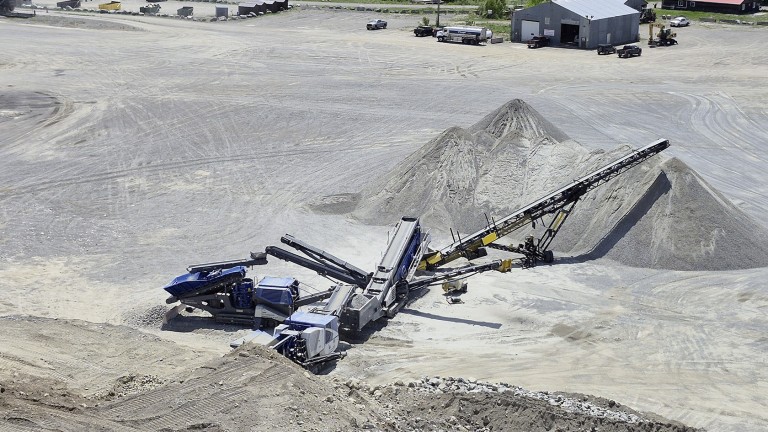
Bird’s eye view of the screening plant

The safety functions are also an important feature for the Garden River crew. ‘We appreciate the way the machine protects itself. When there’s a problem, the machine actually sirens it off to warn you and switches itself off, and you then just walk over and diagnose the code. The safety factor that is built into the machines has been instrumental in helping us to learn and understand the machines and keep them running longer,’ says Belleau.

Perzan likes the way smart line coupling also protects the machines. ‘There are sensors when the cone starts getting too full that slow down the jaw feed system.’

Mobility counts

A further advantage of the new machines is their mobility. Belleau is impressed with how easily the machines can be switched from production mode to transportation mode. ‘You just turn on the remote, flip the key, press the button and let it do its start release. Ten seconds later, you’re walking the machine to wherever you need it. It’s not stationary like the old machine. If we find a better spot in the pit to work, everything else can be moved. It’s on tracks and can be hauled over to a new spot, ready to set up the next day.’

Tolles Produkt

A great project

The rehabilitation of the Trans-Canada Highway bypass is more than just an infrastructure upgrade – the project is clear proof of how advanced technology can promote economic self-determination and community growth. By selecting equipment that delivers outstanding efficiency, lower operating costs and higher output, the Garden River First Nation is now ideally equipped not only to meet its current contractual obligations but also to capitalise on future business opportunities in the materials processing sector.

Revitalisation of the community

The goal is the reinvestment of revenues in the revitalisation of the community. Last year, the band built 20 new houses, supplying all the aggregate themselves. And, with the opening of multiple business subdivisions, the economic growth continues. ‘That gives us more work for the community and makes it possible for more people to move back,’ says Balleau. The rehabilitation of Highway 17A brings jobs not only in materials processing but also in road construction, where machine operators, construction workers, surveyors and other human resources are required.

Looking ahead

As the Garden River First Nation continues to expand its materials processing capacity, the foundation it has laid with its investment in Kleemann equipment will support the growth of the community in the coming years. This will help preserve Indigenous culture, language and family ties. Today, 176 years after its founding, Garden River is providing clear proof that honouring traditions and embracing innovation need not be mutually exclusive – and are rather a formula for building a thriving, self-sustaining future.

Plant train:
  • Jaw crusher: one MOBICAT MC 110 EVO2
  • Cone crusher: two MOBICONE MCO 90 EVO2
  • Screening plant: two MOBISCREEN MSC 953 EVO
  • Output: approx. 200 t/h
Material:
  • Feed material: granite and quartz
  • Final product:
    Granular A: base layer,
    Granular B: sub-base layer,
    Superpave

Mobile jaw crushers

Mobile cone crushers

Mobile screening plants

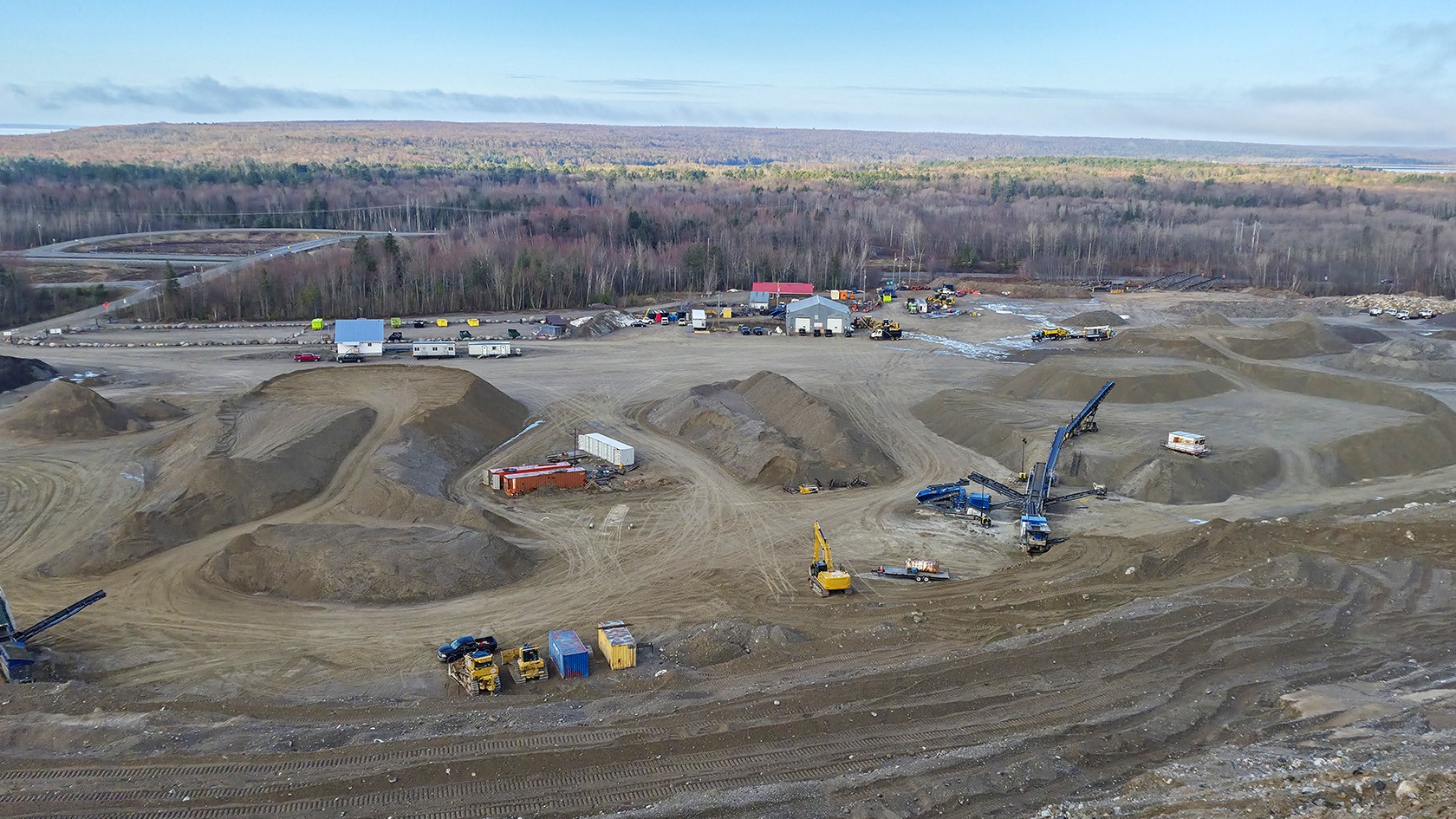
Bird’s eye view of the whole quarry

Press/media kit

Click here to download a ZIP file containing the press release in the available languages in Microsoft Word format and the images in 300 dpi resolution.

Download