Construction Material Recycling Today
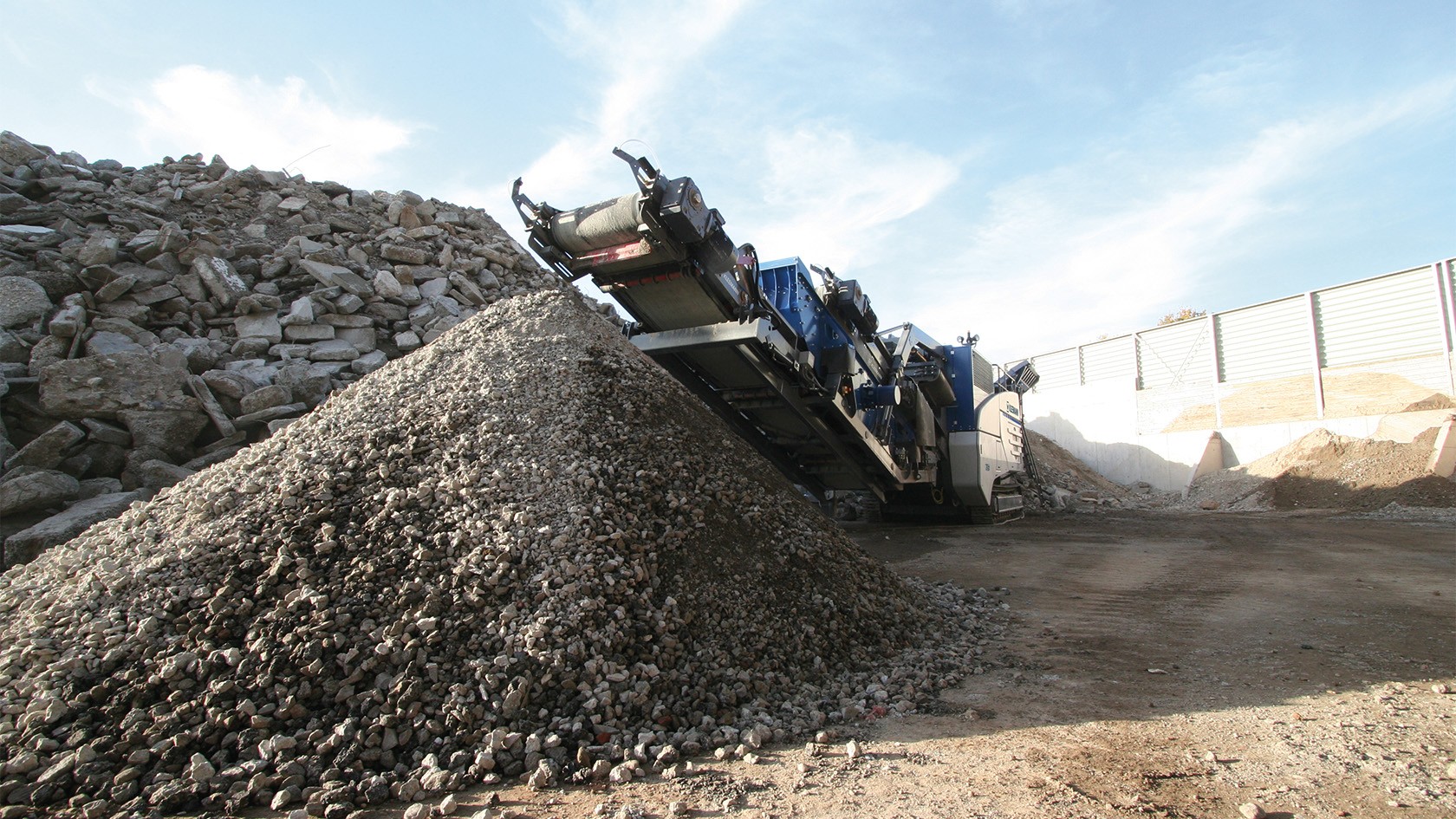
The construction industry faces the challenge of reconciling increasing material requirements with the goals of a sustainable circular economy. Construction material recycling plays a key role in this, as it enables CO₂ emissions to be reduced. With its mobile crushing and screening plants, Kleemann makes a decisive contribution to the efficient and economical processing of high-quality recycled construction materials.

“The greater the effort involved in preparing the material by crushing, screening, sifting, or washing, the higher the quality of the resulting recycled construction materials.”
Laurin Winter, Product Manager, impact crushers at Kleemann
Basics of recycling
Downcycling, recycling, and upcycling showcase the quality of the recovered material. Downcycling describes the reuse of lower-value materials, such as when high-quality demolished concrete is used solely as filler material. Recycling, on the other hand, aims to recover equivalent building materials that have similar properties to primary materials. With upcycling, targeted processing and innovative methods can even increase the value of the material compared to before. “The general rule is: the greater the effort involved in preparing the material by crushing, screening, sifting, or washing, the higher the quality of the resulting recycled construction materials,” explains Laurin Winter, Product Manager, impact crushers at Kleemann. Modern technologies from Kleemann enable precise separation and processing, resulting in high-quality final products that can often be reused in infrastructure construction.

The Kleemann plants show how this works: The greater the effort involved in preparing the material by crushing, screening and sifting, the higher the quality of the resulting recycled construction materials.
From waste material to resources
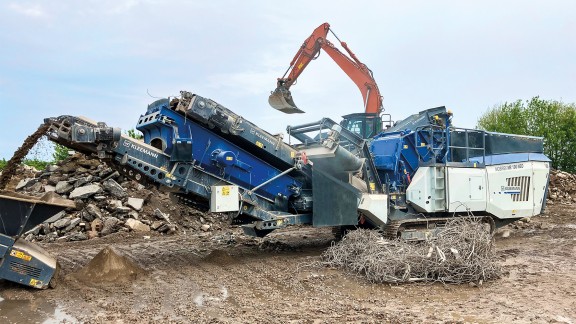
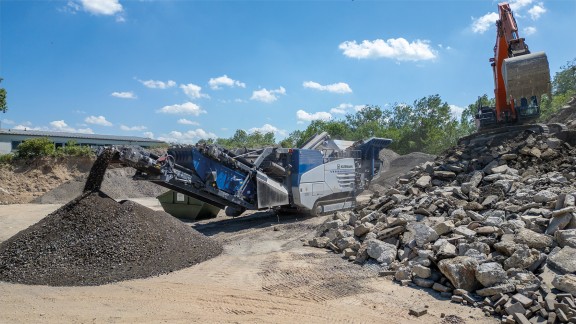
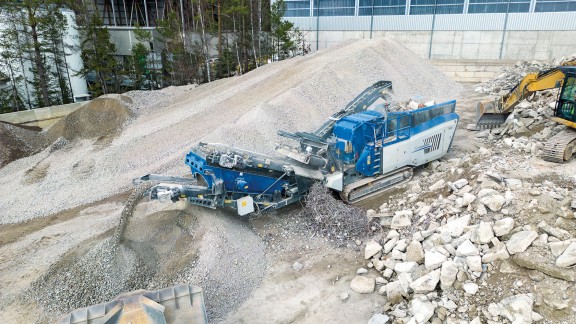
Mixed rubble, consisting of concrete, masonry, asphalt, and other mineral components, accounts for the largest share of construction waste in Germany. “Our impact crusher MOBIREX MR 130 PRO is a perfect example of how efficient mixed rubble recycling works: The crusher combines high crushing capacity with energy-efficient drive technology and integrated dust and noise protection. In addition, there are special options geared towards recycling,” says Laurin Winter. The crushing plant can be equipped, for example, with a magnet for iron removal, a secondary screening unit for the classification of two final products, and wind sifting for a clean final product. The result is high-quality RC building materials which, depending on their classification, are suitable for road subgrades, utility trench construction, and even concrete mixes. For the carbon footprint of construction sites, this represents an enormous contribution to resource conservation and a reduction in the number of transport routes.
Old road surfaces given a new life:
Several products from Wirtgen Group are used directly in the field of asphalt recycling. Milling off old road surfaces, crushing them, screening them, and using them as recycled chippings or granulate in the mixing process – this is where Wirtgen milling machines work together with Kleemann crushing plants and Benninghoven asphalt mixing plants in a single production system. The precise grain processing means that up to 100% of the processed material can be reused.
Recognising and overcoming limitations.
Despite their high technical quality, recycled building materials are currently still subject to legal restrictions. Although studies show that recycled materials are often comparable to primary materials in terms of physical and mechanical properties, their use as aggregates is limited in many areas by standards and guidelines.
In addition, the acceptance of recycled building materials still lags behind the possibilities, especially with regard to public tendering. A change in thinking is needed here in order to fully exploit the potential of the circular economy.
“Especially in countries where natural raw material deposits are limited, recycling residual construction material is a practical and necessary supplement to meeting material demand,” Laurin Winter sums up.
