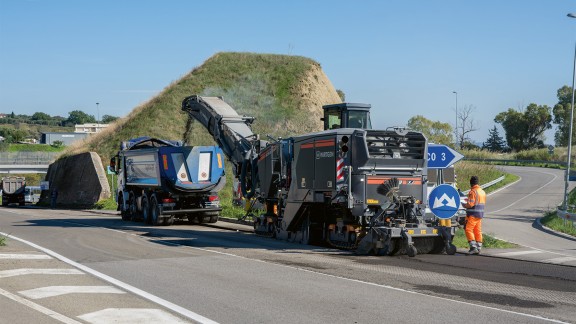
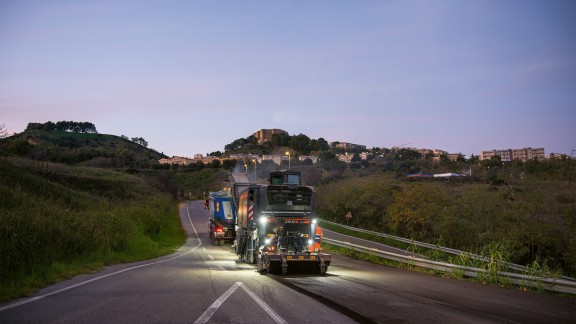
Surface layer removal on the Via Appia in southern Italy, hilly landscape, the W 210 XF working in the foreground.

June 2026 | Reading time: 6 min

On the ancient Roman superhighway

Surface layer removal in southern Italy with the Wirtgen W 210 XF

Only very few roads in the world are as famous as the Via Appia in Italy. To today’s road users it is better known as the SS 7 (State Highway 7) and is a part of the Italian highway network.
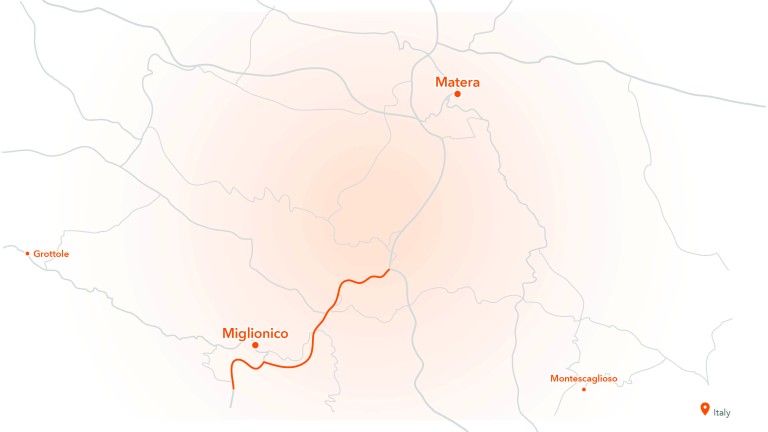
Location map showing the Via Appia with a focus on the sections of the highway near Miglionico.

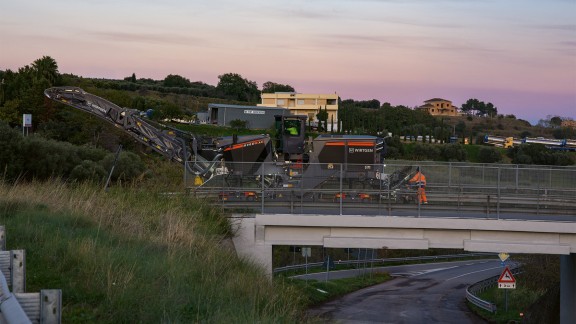
After around 2,350 years in use, it’s clear that repairs and maintenance will become necessary every now and again. As was the case near the town of Miglionico in southern Italy. The Italian road construction contractor Impresa Turlione was awarded the contract for milling work on three sections of the road. The work in the shadow of Castello del Malconsiglio also included milling on and under a bridge.

Wirtgen Performance Tracker and
John Deere Operations Center™

Many sections of the state highway needed resurfacing, and the work had to be carried out on the same day. The contractor made use of the Wirtgen Performance Tracker, in short WPT, to keep track of the individual construction phases. The advantage: thanks to the registration of construction site information with an accuracy measured in centimetres, the smart system delivered the best documentation and billing options. The machine performance data is transmitted to the John Deere Operations Center™ in real-time, where it is saved and stored for use at any later time. This also makes it possible to analyse and evaluate even the smallest details of the work being carried out on several construction sites on the same day. With the new Jobsite Intelligence from the Wirtgen Group, all relevant data such as machine running hours, fuel consumption, or the processed distance are recorded and collected in real-time and made available for flexible end devices. ‘For one thing, we’re using the John Deere Operation Center™, because it brings us the advantages of getting a detailed report of what we have done with the machine at the end of each working day. Especially with regard to documentation of the work that’s been done and the resources we’ve used to do it.’ Site Manager Gerardo Grippa is very pleased with it, and reports: ‘The John Deere Operation Center™ gives us the best answers to everything we’ve been looking for.’

More comfort ensures higher efficiency.

Focus on the grey operator’s cabin

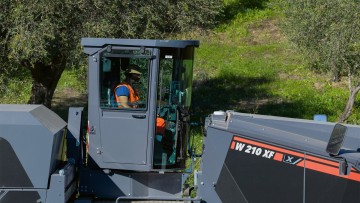
The W 210 XF features a movable and climate-controlled operator’s cabin. Its comfortable working environment ideally protects the operator against wind, rain, heat and dust.

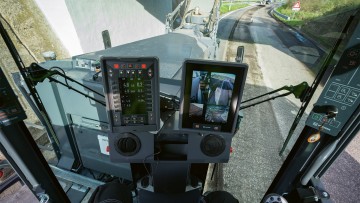
View of the camera/monitor system in the operator’s cabin from above.

The operator’s cabin is equipped with an 8-camera system that displays multiple live images on a 10-inch monitor screen. The cameras automatically switch the images on the monitor screen to show the operator those areas that are currently hidden from view by the cabin position. They also show images of the areas in front of and behind the milling drum housing and monitor material loading at the end of the discharge conveyor.

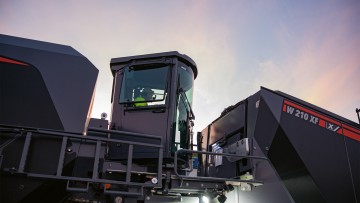
Oblique view of the grey operator’s cabin from below

The operator’s cabin can be moved to one side of the machine. It is folded down for transportation to stay within the conventional transportation dimensions.

Gerardo Grippa, Site Manager at Impresa Turlione, standing in front of the W 210 XF on a sunny day.

‘The Wirtgen W 210 XF with the new operator’s cabin assures that operators can work in a more healthy environment. Operators have only the instruments around them and a clear, 360-degree field of view. This makes it possible to work in all situations, even in bad weather or bright sunshine, and also in less favourable working conditions.’

Gerardo Grippa, Site Manager at Impresa Turlione

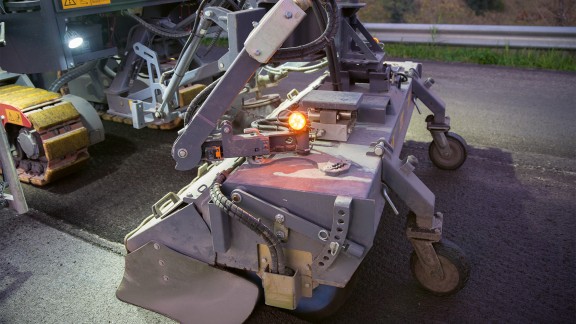
The sweeping unit – a new option for ensuring clean milling work

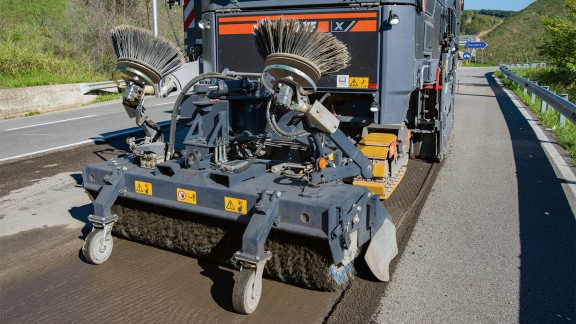
The large milling machine loads the removed asphalt surface material directly into a tipper truck. To guarantee a clean milling pattern, Wirtgen has developed an option that can be mounted on the machine whenever it’s needed: the sweeping unit. ‘This solution from Wirtgen saves us a considerable amount of time on the job by eliminating the need for deploying an additional mobile sweeper and an extra driver, making a significant contribution to our overall resource-efficiency. At the same time, the sweeping unit enables us to keep the construction site much cleaner as the work progresses’, explains Grippa.

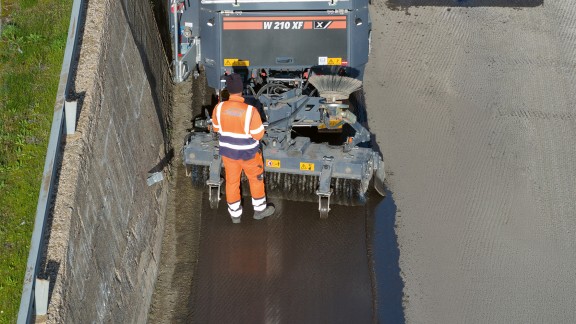
A central brush sweeps across the entire milling width and round brushes at each side keep the milled edges clean. The unit is controlled by the ground crew. If required, the brush can be turned to sweep the material to the left or the right side. In this way, the operator can flexibly control the direction to enable the milled material to be deposited in the direction of the next milling cut. The side brushes are ideal for keeping the roadside verges clean.

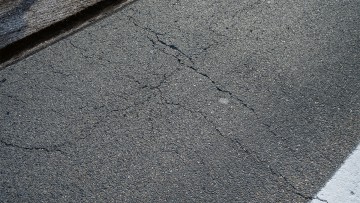
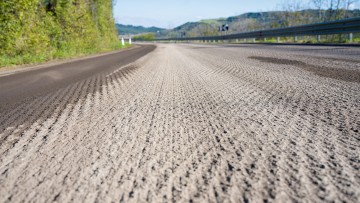
The impressive result speaks for itself: where the asphalt showed countless cracks before the work began, the freshly milled surface now provides an ideal substrate for the paving of the new asphalt layer.

View of the asphalt surface showing the countless cracks.

Before: the asphalt surface shows countless cracks.

View of the cleanly-milled surface.

After: the clean milling result provides an ideal substrate for the paving of the new surface layer.

More details and further information can be found on our product pages.

Cold milling machines