Cold in-plant recycling
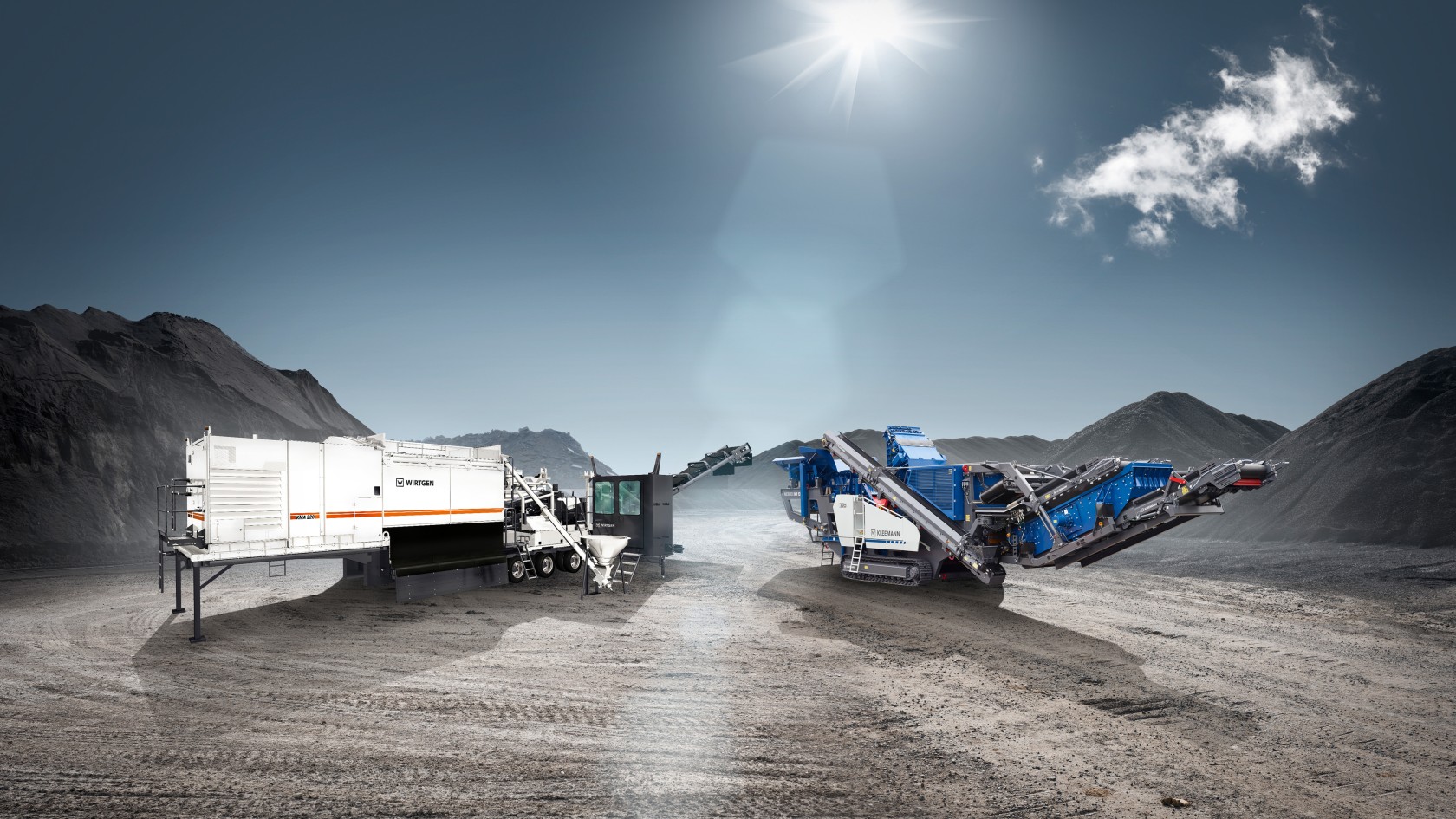
If the mixing plant is located too far away or the construction site doesn’t meet the logistical requirements for the use of a recycling plant train, cold in-plant recycling is often the perfect solution.
Cold in-plant recycling requires a mobile cold recycling mixing plant (KMA) set up close to the construction site. The construction materials to be recycled are transported by trucks to this plant, processed, and then transported back to the construction site by trucks as a high-quality end product, which is then paved straight away. This approach is popular in road construction, but is also possible in demolition waste recycling scenarios. The process makes good economic sense, because the short distances between the construction site and the cold recycling mixing plant save time and money and reduce truck mileage. A variety of machines and plants from the Wirtgen Group work together in the cold in-plant recycling process.
When a building is demolished, for example, the concrete rubble can be recycled. Within this process, synergies are unlocked between the Kleemann and Wirtgen plants. First of all, the concrete must be crushed. However, recyclers often come up against a challenge in this context: reinforced concrete. With reinforced concrete, you often don’t know exactly how hard the concrete is and how much steel it contains. And this can push many crushers to their limits.
The MOBIREX MR 130 Z EVO2 from Kleemann is suitable for such uses. The mobile impact crusher has an optimised inlet geometry for better feed characteristics. In addition, the crusher inlet flap, which can be raised hydraulically, and the upper crusher impact toggle prevent blockages in the crusher inlet area. At the same time, the sensors of the Continuous Feed System (CFS) ensure ideal filling of the crushing chamber.
‘The production of high quality cold mixes is easy with the help of Kleemann impact crushers.’
KLEEMANN impact crushersOverload protection protects the crushing unit against damage from large metal parts such as T-beams. Sensor-controlled hydraulic cylinders enable the impact toggle to move back when a piece of uncrushable material enters the crushing chamber. Pieces of metal are diverted and transported to the crusher discharge belt, which can be equipped with an optional magnetic separator. The electric or permanent magnet attracts the pieces of metal and throws them to the side so that the crushed concrete can be fed into the secondary screening unit without its steel reinforcement.
The secondary screen sorts the crushed concrete into different grain sizes. Oversize material is returned to the crusher unit via the oversize material return belt in a closed loop. All of the MOBIREX MR 130 Z EVO2’s functions can be controlled via the simple and intuitive SPECTIVE control concept. For example, the crushing gap can easily be adjusted to the desired size by touch screen control – even when the rotor is running. It couldn’t be easier or safer.
The concrete aggregate with the desired gradation is then fed into the Wirtgen KMA 240 by a wheel loader or directly from the crusher. The cold recycling mixing plant mixes the concrete with binding agents and water to produce a high-quality final product, e.g. for a hydraulically bonded base layer that can then be immediately used for repaving. Due to the mixing location in the immediate vicinity of the demolition site, not much time passes between demolition, cold in-plant recycling and paving.


‘Thanks to the mobile concept of the Wirtgen cold recycling mixing plant, it can be quickly and easily relocated to the immediate vicinity of the site where it’s needed, saving both time and money.’
Even more machines from the Wirtgen Group can be used in combination in road construction. During road rehabilitation, the layers in need of rehabilitation can be milled out with a milling machine from Wirtgen. The reclaimed materials are then transported by truck to the mixing site near the construction site. The reclaimed materials are then processed in a Kleemann impact crusher at the mixing site. A Deere excavator or wheel loader loads the milled material into the hopper of the crushing plant, which then crushes it to the required grain size.
The cold recycling mixing plant is fed by a John Deere wheel loader or directly from the crusher. In the cold recycling mixing plant (KMA), the reclaimed material is mixed with water and binding agents such as foamed bitumen, bitumen emulsion or cement. The cold mix is then transported back to the construction site, where it is paved using a Vögele paver. Last but not least, the freshly paved surface is compacted by a Hamm compactor. This is how the machines and plants from the Wirtgen Group perfectly complement one another in the road construction process chain. When one machine or plant stops, the next begins its work – working hand-in-hand to deliver perfect results from a single source.