Cold in-situ recycling
Once the load-bearing capacity of the asphalt surface has been affected, complete rehabilitation of the road structure becomes essential. The current trend: efficient and cost-effective solutions in which recycling of the pavement material removed by milling is a basic requirement.
In the cold in-place (or in-situ) recycling process, the reclaimed material is not removed from the construction site at all, but is processed and repaved on the spot. This not only eliminates the need for trucks to make frequent trips to a processing facility, but also shortens construction times.
‘Wirtgen’s cold recycling process has established itself as a proven technology over the years and already meets tomorrow’s requirements.’
A WIRTGEN cold recyclerAs a pioneer in cold recycling, Wirtgen offers a range of technologies and processes that can be deployed to meet the needs of each specific situation. Nevertheless, the underlying technology is the same for all cold recyclers: small amounts of a cement binding agent are spread ahead of the cold recycler, the asphalt layer is granulated to the desired depth, the granulate is mixed with the binding agent and water, bitumen emulsion or foamed bitumen and then repaved and compacted.
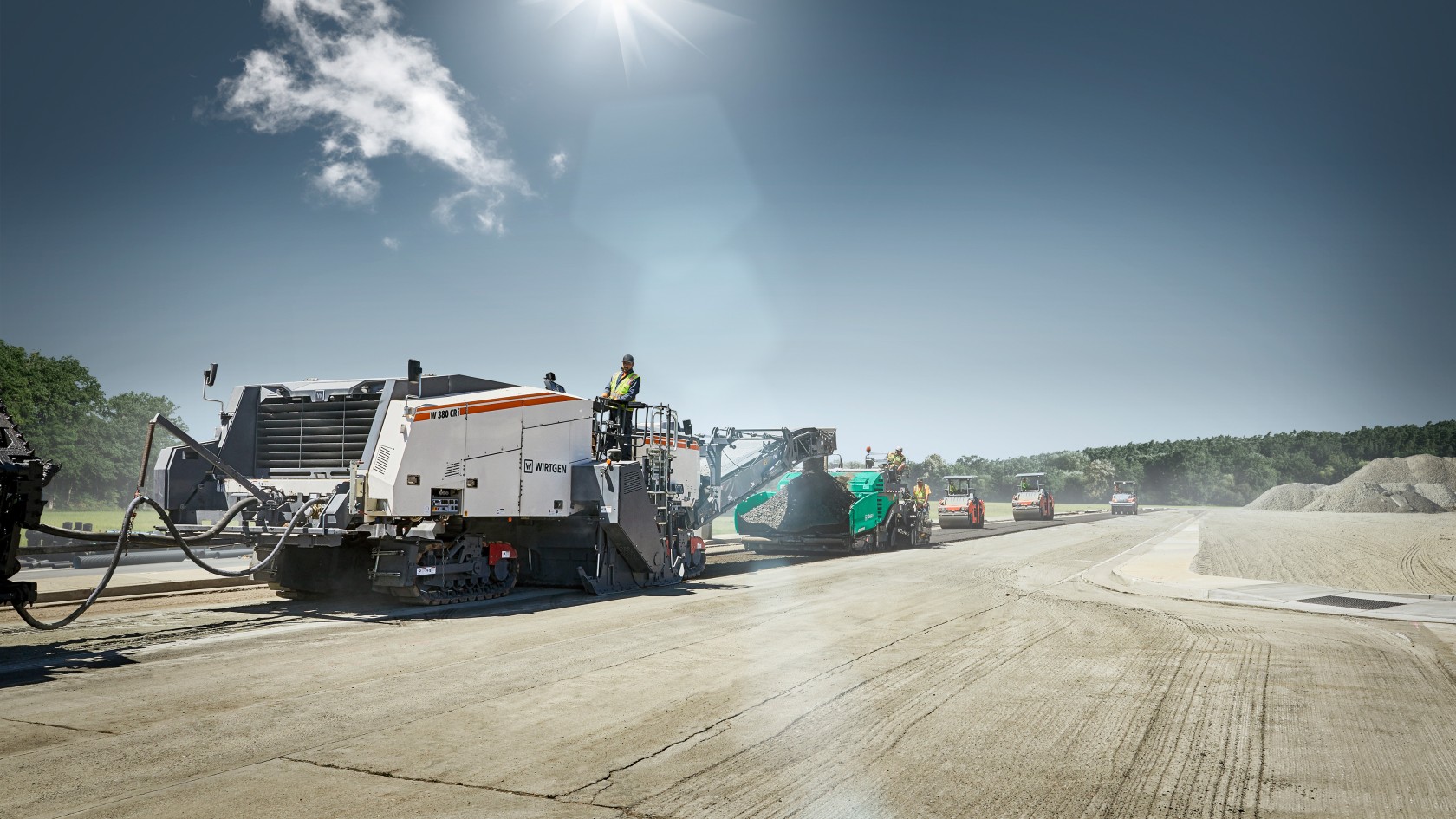
Projects being realised with a Wirtgen CR series cold recycler usually require the use of an asphalt paver. The homogeneous construction material produced by the cold recycler is transferred directly to the material hopper of the asphalt paver, which then paves it with pre-compaction.
With the WR series of cold recyclers, paving is fundamentally carried out without the need for an additional paver. Before compaction, the material is finely profiled by a Grader.
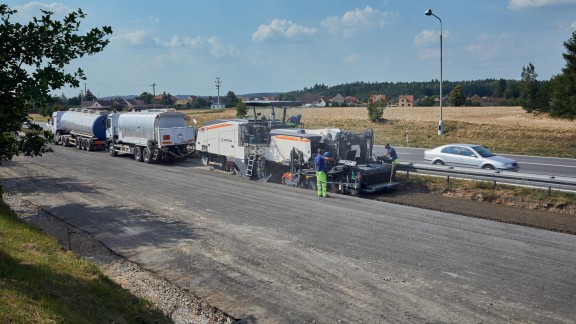
In a recycling train, all cold recyclers are supplied from a water tanker and, if necessary, emulsion or bitumen tankers driving ahead of the machine.
The Wirtgen cold recycler transfers the processed mix directly to the paver’s material hopper for paving. This is followed by compaction.
The Wirtgen WR cold recycler and soil stabiliser granulates the damaged layers. At the same time, the pre-spread cement is mixed in and bitumen and water are sprayed into the mix. This is followed by compaction.
The cold recycling train, made up of a tank truck, a WR 240 cold recycler and a Hamm roller, produces a stable surface that can, if necessary, also be opened to traffic without a new surface layer.
Foamed bitumen is produced by high-pressure injection of small amounts of water and air into heated bitumen. The water then evaporates and the steam produced causes the bitumen to foam up instantly to between 15 and 20 times its original volume. The foam is then added directly to the mixer via injection nozzles and thoroughly blended into the cold and moist construction materials. The quality of the foamed bitumen is primarily defined by the parameters ‘expansion’ and ‘half-life’. This is because the greater the expansion and the longer the half-life, the easier it is to work with the foamed bitumen.
Wirtgen laboratory equipment: Preliminary testing for the determination of the mix quality
In many countries around the globe, cold recycling using foamed bitumen as a binding agent has become an established method for the rehabilitation of roads that is increasingly moving into the focus of road construction authorities and construction contractors, and, in some countries, is already the standard procedure offered in tenders. The flexible and enduring layers produced in this way create the perfect foundation for a final asphalt surface layer with reduced thickness. Foamed bitumen is produced from normal bitumen at a temperature of approx. 175 C using state-of-the-art technology. In the in-situ method, the microprocessor-controlled injection systems of the Wirtgen cold recyclers of the CR and WR series inject precisely dosed amounts of the binding agent into the mineral aggregate mix. This means that a project can be realised as a rolling construction site.


An interview with Martin Diekmann, Product Manager Cold Recycling at WIRTGEN
Read the interview